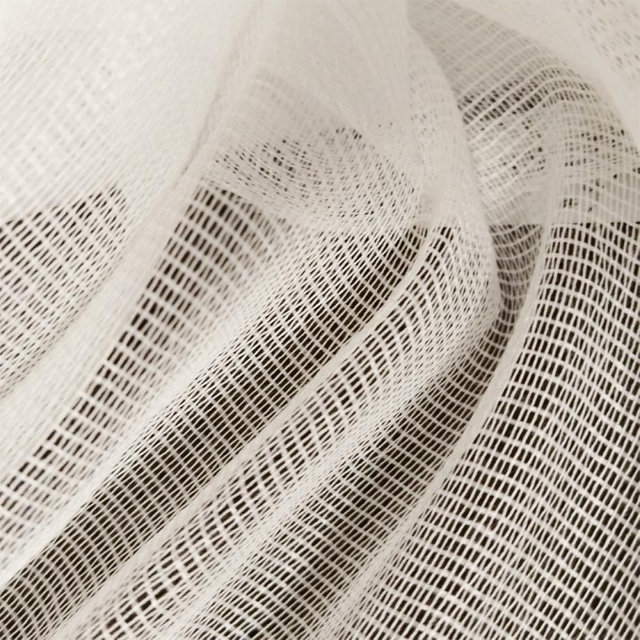
Jumbo Roll Scrim Backing Fabric

- All
- Product Name
- Product Keyword
- Product Model
- Product Summary
- Product Description
- Multi Field Search
Views: 0 Author: Site Editor Publish Time: 2026-05-01 Origin: Site


Nonwoven fabrics have emerged as one of the textile industry's most versatile and rapidly growing segments, serving applications that span from sophisticated medical devices to heavy-duty industrial filtration. Unlike traditional woven or knitted textiles, nonwoven fabrics are engineered directly from fibers bonded together through mechanical, thermal, or chemical processes. This manufacturing approach enables unique combinations of properties and cost structures that address diverse application requirements.
The global nonwoven fabric market continues expanding as manufacturers discover new applications and existing applications migrate from conventional textiles to engineered nonwoven solutions. This growth reflects the fundamental advantages that nonwovens offer: cost efficiency through streamlined manufacturing, property optimization through engineered structures, and design flexibility through multiple production technologies. Understanding nonwoven fabric applications enables buyers to identify opportunities where these materials can deliver superior value.
For industrial buyers evaluating nonwoven fabrics, the diversity of available products can seem overwhelming. Fiber types, bonding methods, fabric weights, and surface treatments combine in countless configurations to create materials tailored for specific applications. This guide provides systematic understanding of nonwoven fabric technology and its industrial applications, enabling more effective material selection and supplier evaluation.
Nonwoven fabrics are sheet or web structures produced by bonding, entangling, or otherwise associating fibers together. The defining characteristic distinguishing nonwovens from traditional textiles is the absence of weaving or knitting processes that interlace yarns into fabric structures. Instead, nonwovens are produced through direct fiber processing that creates fabric integrity through fiber-to-fiber bonding.
The manufacturing processes for nonwoven fabrics fall into several categories based on the bonding mechanism employed. Spunbonding extrudes continuous filaments that are collected on a moving belt and bonded through thermal or chemical means. Meltblowing creates fine fibers through high-velocity air extrusion that produces very fine fiber diameters ideal for filtration applications. Drylaid processes use staple fibers that are carded or air-laid into webs before bonding.
Each manufacturing process creates nonwoven fabrics with distinct property combinations suited for particular applications. Spunbond nonwovens offer good strength and durability at moderate costs, making them suitable for durable applications. Meltblown nonwovens provide exceptional filtration efficiency through fine fiber structures but limited mechanical strength. Drylaid nonwovens offer versatility in fiber selection and fabric properties.
The nonwoven fabric industry emerged in the mid-twentieth century with early products serving disposable hygiene applications. Initial nonwoven production used basic bonding technologies that produced fabrics with limited performance characteristics. As manufacturing technologies advanced, nonwovens gained mechanical properties that enabled broader application development.
Technological advancement has continuously expanded nonwoven capabilities and application possibilities. Fiber materials have evolved from basic polyester and polypropylene to specialty fibers including bicomponent structures, conductive fibers, and high-performance polymers. Bonding technologies have advanced to provide better property control and material efficiency. These improvements have enabled nonwoven penetration into demanding applications previously served only by traditional textiles.
The industry structure has consolidated around major manufacturers with global production capabilities while maintaining specialized producers for niche applications. This structure provides buyers with options ranging from commodity nonwovens supplied by high-volume producers to specialty materials from technical nonwoven manufacturers. Understanding this structure helps buyers identify appropriate suppliers for their specific requirements.
Nonwoven fabrics are categorized primarily by manufacturing process, which determines fundamental property characteristics and application suitability. Understanding these categories enables systematic material evaluation and selection.
Spunbond nonwoven fabrics are produced by extruding continuous polymer filaments that are drawn, laid on a moving belt, and bonded. The spunbond process produces fabrics with good mechanical strength, consistent thickness, and cost-effective pricing for high-volume applications. These characteristics make spunbond nonwovens popular for applications including geotextiles, disposable medical products, and packaging materials.
Polypropylene spunbond nonwovens represent the largest volume product category, driven by the material's excellent cost-performance ratio and processability. Polyester spunbond nonwovens offer superior temperature resistance and mechanical durability for applications requiring enhanced performance. Bicomponent spunbond fabrics combine different polymers in core-sheath or side-by-side configurations to achieve property combinations impossible with single-polymer materials.
The polyester woven scrim mesh manufacturing capabilities at Cinfudy demonstrate how modern spunbond production delivers consistent quality across demanding production volumes. Advanced process control enables tight tolerances for fabric weight, thickness, and physical properties. These capabilities ensure reliable performance in applications where consistency is critical for product quality.
Meltblown nonwoven fabrics are produced by extruding polymer through fine die capillaries while directing high-velocity hot air at the extruded fibers. This process creates extremely fine fibers typically ranging from 1-5 microns in diameter. The fine fiber structure creates high surface area per unit weight that provides excellent filtration efficiency and adsorbent capacity.
Meltblown nonwovens serve critical filtration applications including face masks, air filters, and liquid filtration media. The fine fiber structure captures small particles through combined mechanisms including direct interception, inertial impaction, and diffusion. Filter efficiency can be optimized through fiber diameter control and basis weight adjustment to meet specific filtration requirements.
Processing challenges associated with meltblown nonwovens include limited mechanical strength and sensitivity to thermal conditions. These limitations are typically addressed through composite structures that combine meltblown filtration layers with spunbond reinforcement fabrics. These SMS composites provide filtration efficiency with adequate mechanical durability for demanding applications.
Needlepunched nonwoven fabrics are produced by mechanically entangling staple fibers through repeated punching with barbed needles. This process creates fabric structures with excellent bulk, porosity control, and fiber locking that maintains dimensional stability. The needlepunching process works with diverse fiber materials including natural fibers, synthetic fibers, and glass fibers.
The versatility of needlepunching enables production of nonwovens with varied characteristics including high bulk for insulation applications, controlled porosity for filtration media, and excellent conformability for sealing applications. The process produces fabrics ranging from lightweight 30 GSM materials to heavyweight 1000+ GSM industrial fabrics. This range enables applications from disposable products through heavy-duty geotextiles.
Needlepunched nonwovens offer excellent value for applications requiring bulk, thickness, or permeability characteristics that are difficult to achieve with other nonwoven technologies. The mesh backing for vinyl products from Cinfudy illustrate how needlepunching technology creates fabrics optimized for specific industrial applications. These materials provide cost-effective solutions for applications where premium performance is not required.
Nonwoven fabrics serve extensive industrial and commercial applications where their unique property combinations provide superior value compared to alternative materials. Understanding these applications helps buyers identify opportunities for nonwoven implementation.
Filtration represents one of the largest application categories for industrial nonwoven fabrics, driven by increasing air quality requirements, process efficiency demands, and environmental regulations. Nonwoven filter media provide efficient particle capture at costs significantly below competing filter media including cellulose papers, glass fiber, and ceramic materials.
Air filtration applications utilize nonwoven fabrics in HVAC systems, industrial dust collection, and respiratory protection equipment. Filter media selection considers filtration efficiency, pressure drop, dust holding capacity, and service life requirements. Nonwoven fabric engineering can optimize these parameters for specific applications through fiber diameter selection, fabric density gradients, and surface treatment modifications.
Liquid filtration applications employ nonwoven fabrics in water treatment, chemical processing, and food and beverage production. Filter media must withstand liquid exposure while maintaining particle capture efficiency. Chemical compatibility requirements determine fiber material selection, with polypropylene and polyester providing broad chemical resistance for most processing applications.
Geotextile nonwovens provide separation, reinforcement, and drainage functions in civil engineering and construction applications. These materials improve construction efficiency and long-term performance by addressing soil stability, water management, and load distribution challenges. Nonwoven geotextiles offer cost-effective solutions for applications where premium performance is not required.
Separation geotextiles prevent mixing between different soil layers during road construction, railway bedding, and foundation preparation. Nonwoven fabrics provide effective separation while allowing water transmission that prevents hydrostatic pressure buildup. The puncture resistance and durability of nonwoven geotextiles ensure long-term performance throughout infrastructure service life.
Drainage geotextiles combine filtration and separation functions with water collection and transmission capabilities. These fabrics are designed with porosity characteristics that prevent soil migration while enabling efficient water flow. Drainage geotextile performance is critical for retaining wall construction, tunnel waterproofing, and landfill engineering applications.
Medical nonwoven fabrics serve critical healthcare applications including surgical gowns, drapes, wound dressings, and disposable medical devices. These applications demand strict compliance with regulatory requirements including sterility, barrier properties, and biocompatibility. Nonwoven fabrics provide the combination of barrier performance, comfort, and cost efficiency that healthcare applications require.
Surgical gowns and drapes require barrier properties that prevent liquid and microbial transmission while maintaining comfort and dexterity for surgical procedures. Nonwoven fabric constructions combine fluid-resistant layers with breathable areas that reduce heat stress during extended procedures. Quality certification and testing documentation are essential for medical nonwoven selection.
Hygiene product nonwovens serve absorbent product applications including diapers, feminine hygiene products, and adult incontinence products. These applications require softness, liquid acquisition, and distribution characteristics that nonwoven fabrics provide effectively. High-volume production and cost efficiency are critical for these competitive consumer product markets.
Nonwoven fabrics deliver specific benefits that make them preferred choices for many industrial applications. Understanding these benefits enables buyers to evaluate nonwovens against alternative materials for their specific applications.
Manufacturing cost advantages represent one of the primary benefits driving nonwoven fabric adoption. The direct conversion of fibers into fabric without yarn spinning or weaving processes eliminates several processing steps that increase traditional textile costs. This efficiency translates directly to lower material pricing that provides significant value in high-volume applications.
Material efficiency in nonwoven production minimizes waste generation compared to traditional textile cutting and sewing operations. Fabric rolls can be engineered to exact width requirements, reducing trim losses that increase effective material costs. Production planning optimization can further reduce waste by coordinating fabric widths with product geometry requirements.
Equipment investment for nonwoven production can be lower than for traditional textile manufacturing, particularly for spunbond and meltblown processes. These lower capital requirements enable competitive production from smaller manufacturers while supporting favorable pricing dynamics. Buyers benefit from multiple supply options that prevent excessive supplier leverage.
Nonwoven fabric properties can be engineered across wider ranges than traditional textiles through fiber selection, fabric construction, and surface treatment options. This versatility enables nonwovens tailored for specific application requirements rather than compromises between conflicting property demands. Property optimization reduces material usage by concentrating performance where it provides maximum benefit.
Porosity control in nonwovens enables precise filtration efficiency specification that balances particle capture against pressure drop and service life requirements. Fabric structure engineering can create gradient density profiles that improve filtration performance beyond uniform density alternatives. These capabilities enable nonwoven optimization for specific filtration applications.
Surface treatment versatility allows nonwovens to achieve properties unattainable through fiber and construction selection alone. Antimicrobial treatments inhibit bacterial growth on fabric surfaces. Hydrophobic treatments repel water while maintaining breathability. Adhesive compatible treatments enable bonding with various adhesive systems for product assembly.
Manufacturing flexibility enables nonwoven production of forms difficult or impossible with traditional textiles. Tubular fabrics, three-dimensional shapes, and composite structures can be produced through specialized manufacturing approaches. This flexibility expands design possibilities that nonwovens enable in product development.
Custom fabric widths from narrow rolls for specialty applications to wide rolls for covering and packaging applications accommodate diverse product requirements. Roll diameters and cores can be specified for compatibility with existing processing equipment. These options enable nonwoven implementation without major capital investment in new equipment.
Color and appearance options through pigmented fibers, surface printing, and embossing enable product differentiation through aesthetic characteristics. Custom colors support brand identity requirements while printed patterns can provide functional benefits including visual inspection guides and product identification.
Understanding nonwoven fabric market dynamics helps buyers develop effective sourcing strategies and anticipate market developments that might affect supply availability and pricing.
Global nonwoven fabric production exceeds 10 million metric tons annually with continued growth expected across all major regional markets. Asia-Pacific represents the largest and fastest-growing production region, driven by manufacturing expansion in China and Southeast Asian economies. European and North American producers maintain strong positions in technical and specialty nonwoven segments.
Capacity utilization rates vary by product category and region, with overcapacity in commodity products and tighter supply in specialty categories. Buyers should monitor capacity developments in their product categories to anticipate supply constraints that might affect sourcing stability. Long-term supply agreements can secure allocation during tight supply periods.
Major manufacturers continue expanding production capabilities through new equipment installation and capacity optimization. Technology advancement in production equipment improves efficiency and enables new product development. Buyers benefit from these investments through improved quality, lower costs, and expanded product availability.
Nonwoven fabric pricing reflects raw material costs, manufacturing efficiency, and market competition dynamics. Polypropylene and polyester, as primary raw materials, significantly influence nonwoven pricing through polymer market movements. Energy costs affect manufacturing economics, particularly for processes requiring significant thermal energy input.
Price trends show moderate inflation over time with periodic volatility driven by raw material market fluctuations. Long-term contracts can provide price stability while exposing buyers to market movements that might provide better pricing in volatile periods. Contract terms should balance price stability benefits against flexibility requirements for changing demand.
Regional pricing variations reflect manufacturing cost differences, transportation expenses, and market competition intensity. Import duties and trade policies affect competitive dynamics in regional markets. Buyers should evaluate landed costs that include all expenses from purchase through delivery to ensure accurate cost comparison.
Effective nonwoven fabric procurement requires systematic evaluation of requirements and options to identify optimal solutions. This guide provides a framework for developing effective procurement strategies.
Application analysis begins with comprehensive documentation of functional requirements that nonwoven fabrics must satisfy. Document performance parameters including mechanical properties, barrier characteristics, porosity requirements, and environmental resistance. Include both minimum acceptable levels and target performance levels where exceeded performance provides additional value.
Processing requirements influence nonwoven specification beyond end-use performance characteristics. Consider how fabrics will be handled during manufacturing operations including unwinding, cutting, bonding, and assembly. Equipment compatibility for roll dimensions, core specifications, and splice requirements should be verified with production operations.
Regulatory requirements may apply depending on application and market. Medical applications require compliance with specific quality standards and testing documentation. Food contact applications require regulatory approval for food contact materials. Environmental regulations may affect material selection based on recyclability or disposal requirements.
Quality system assessment evaluates supplier capabilities to consistently produce fabrics meeting specifications. ISO 9001 certification indicates basic quality management system implementation. Industry-specific certifications may be required for demanding applications. Request quality documentation including test reports, process capability studies, and quality procedure descriptions.
Manufacturing capability assessment confirms that suppliers can meet volume requirements while maintaining quality levels. Consider production equipment types, capacity availability, and production scheduling capabilities. Evaluate geographic presence for logistics efficiency and communication effectiveness.
Technical support capabilities influence successful nonwoven implementation in product development and manufacturing optimization. Suppliers offering application engineering support can accelerate development timelines and reduce implementation risks. Technical capability indicators include engineering staff, testing facilities, and experience with similar applications.
Sample testing should evaluate nonwoven fabrics against specific application requirements through relevant test methods. Develop testing protocols that represent actual service conditions including mechanical loads, environmental exposures, and aging requirements. Document acceptance criteria before beginning testing to ensure objective evaluation.
Production trials provide evaluation of nonwoven processing characteristics that laboratory testing cannot capture. Monitor fabric handling during manufacturing operations including unwinding behavior, cutting characteristics, and bonding performance. Evaluate finished product quality including appearance, performance, and consistency.
Extended evaluation through pilot production runs identifies issues that might not appear in short-term testing. Monitor quality trends over extended production periods to verify consistent material performance. Document any issues encountered and their resolution to inform future sourcing decisions.
This comparison highlights key performance characteristics for Cinfudy nonwoven fabrics relative to typical market offerings. Objective comparison enables informed material selection decisions.
Specification | Cinfudy Textile | Competitor A | Competitor B | Industry Average |
|---|---|---|---|---|
Thickness Range | 20-800 GSM | 40-600 GSM | 50-500 GSM | 45-550 GSM |
Tensile Strength | 150-600 N | 100-450 N | 90-400 N | 110-420 N |
Porosity Control | ±10% | ±20% | ±25% | ±18% |
Customization Lead | 12-18 days | 25-35 days | 30-40 days | 28 days |
Quality Certification | ISO 9001, ISO 13485 | ISO 9001 | ISO 9001 | ISO 9001 |
Technical Support | Application Engineering | Product Only | None | Limited |
Primary nonwoven categories include spunbond fabrics for durable applications, meltblown fabrics for filtration, needlepunched fabrics for bulk and filtration applications, and wetlaid fabrics for specialty applications. Each type offers distinct property combinations suited for specific applications.
Application requirements analysis identifies necessary performance characteristics including mechanical strength, porosity, chemical resistance, and environmental stability. Match these requirements against nonwoven fabric types and evaluate candidate materials through specification review and sample testing.
Nonwoven fabrics offer cost advantages through streamlined manufacturing, property versatility through engineered structures, and design flexibility for custom configurations. These benefits make nonwovens preferred choices for many industrial applications.
Yes, nonwoven fabrics can be customized across fiber materials, fabric weights, bonding methods, surface treatments, and finished product configurations. Discuss your requirements with manufacturers to explore customization options.
Lead times vary by product type and customization requirements. Standard specifications typically ship within 2-3 weeks while custom specifications may require 4-6 weeks. Establish clear expectations with suppliers during order placement.
Store nonwoven fabrics in clean, dry environments protected from direct sunlight and contamination. Maintain appropriate temperature and humidity levels to prevent moisture-related issues. Use first-in-first-out inventory rotation.
ISO 9001 certification indicates basic quality management capability. Application-specific certifications may be required for medical, food contact, or other regulated applications. Request documentation of relevant certifications.
Property specifications vary between manufacturers based on production equipment, process control, and quality standards. Request actual test data and conduct independent verification to confirm specifications meet requirements.
Nonwoven fabrics provide versatile, cost-effective solutions for extensive industrial and commercial applications. The engineering flexibility of nonwoven manufacturing enables property optimization that delivers superior value across diverse application requirements. Understanding nonwoven technology and applications positions buyers to leverage these materials effectively.
The continued expansion of nonwoven applications reflects industry recognition of the value these materials provide. New applications in filtration, healthcare, and environmental management drive market growth while technology advancement enables performance improvements and cost reduction. Manufacturers who effectively utilize nonwoven fabrics gain competitive advantages through improved product performance and manufacturing efficiency.
Strategic supplier relationships enhance nonwoven fabric value through technical support, quality assurance, and supply reliability. Suppliers like Cinfudy provide not only quality materials but also application expertise that accelerates implementation and ensures successful outcomes. Building these partnerships creates mutual value that extends beyond individual transactions.
Successful nonwoven implementation requires systematic approach to requirement definition, material evaluation, and supplier selection. The investment in developing nonwoven capability pays dividends through improved product performance, manufacturing efficiency, and competitive positioning. Manufacturers who master nonwoven applications will capture growth opportunities across expanding application markets.


