Jumbo Roll Scrim Backing Fabric

- All
- Product Name
- Product Keyword
- Product Model
- Product Summary
- Product Description
- Multi Field Search
Views: 0 Author: Site Editor Publish Time: 2026-07-20 Origin: Site


Commercial and residential wallcoverings rely entirely on an invisible foundation. A beautiful decorative surface cannot survive long without the right substrate supporting it. What lies behind the design ultimately dictates the lifespan of the entire installation. Sourcing the wrong substrate quickly leads to costly installation failures. Installers frequently battle seam curling, adhesive bleed-through, or sagging materials on the job site. Conversely, over-engineering a product by paying for heavy-duty drill fabric in low-traffic areas wastes valuable project budgets. You need a balanced approach for standard commercial spaces.
We will explore how a lightweight scrim fabric provides the optimized solution. It ensures dimensional stability and manufacturing efficiency in light-to-medium traffic applications. Readers will learn how to match substrate engineering to actual wall conditions. We will also cover strategies for scaling production and avoiding common installation risks. You will discover why specific synthetic blends outperform pure fibers in real-world scenarios.
Application Match: Lightweight scrim fabric is engineered specifically for light-traffic zones and ASTM Type I / light Type II classifications.
The "Lab vs. Wall" Reality: High tensile strength in pure polyester must be balanced with sufficient absorbency to ensure proper adhesive retention and corner wrapping.
Manufacturing Scalability: Jumbo polyester scrim rolls reduce changeover waste and support broad compatibility with both traditional vinyl and PVC-free composite laminates.
Risk Mitigation: Applying bare decorative fabrics directly to walls causes sagging and glue penetration; scrim backing acts as the essential stabilizing barrier.
Modern commercial wallcoverings rarely consist of a single piece of material. They rely on a highly engineered sandwich construction. This multi-tier approach ensures the product looks beautiful while surviving daily wear. You can break down this construction into a standard three-layer model.
Decorative Surface: This is the top printing layer. It carries the visual design, texture, and protective topcoats. Common materials include traditional vinyl or PVC-free composites.
Intermediate Background Layer: This middle section provides opacity. It prevents underlying wall colors or imperfections from showing through. It also adds necessary thickness to the product.
Substrate/Backing: This is the structural anchor. It directly contacts the wall adhesive. It provides tear resistance and prevents the decorative layers from stretching or shrinking.
The function of the substrate is completely non-negotiable. Bare materials stretch heavily under standard temperature and humidity fluctuations. Without a proper wall fabric base, wall adhesives will bleed right through the intermediate layer. This ruins the decorative face and requires a total tear-down.
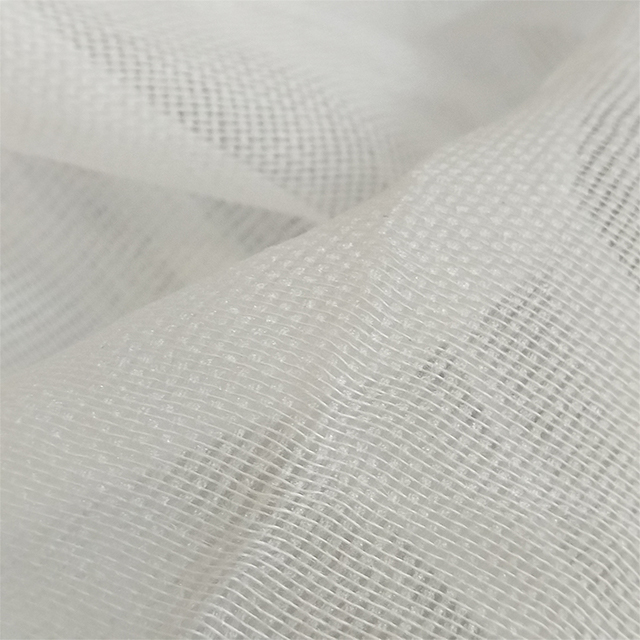
Scrim fits perfectly into this architectural model for specific environments. We define "scrim" as a lightweight, loosely woven wallcovering base cloth. The intersecting yarns provide flexibility and excellent tear resistance at a lower weight class. We must contrast it with heavier alternatives to establish proper boundaries. Osnaburg represents a medium-weight backing ideal for standard Type II commercial spaces. Drill is a heavy, densely woven fabric built for high-traffic Type III zones like hospital corridors. Scrim sits comfortably below these, serving low-to-medium impact areas beautifully.
Material science in the wallcovering industry often faces a gap between laboratory metrics and field performance. Many manufacturers initially assume maximum tensile strength equates to the best product. We must break this "highest strength" myth.
Lab testing routinely shows that 100% pure polyester wallcovering backing yields immense off-wall tensile strength. However, these impressive lab metrics do not always translate to flawless installation. Real-world applications require a complex balance of physical properties.
The absorbency factor dictates installation reality. Pure synthetic fibers inherently lack absorbency. They naturally repel moisture. Installers rely on paste absorption to "lock in" wall adhesives. When a backing fails to retain moisture, the mechanical bond weakens. This lack of grip leads to immediate slippage during hanging. Over time, it causes poor corner fit and severe seam lifting. The wallpaper essentially pulls itself off the drywall.
The poly/cotton compromise offers the perfect solution. Engineers deliberately specify blends or utilize texturized polyester weft yarns to bridge this performance gap. These engineered materials trade a small fraction of excessive tensile strength for superior moisture retention. Contractors experience faster, more reliable adhesion. The cotton or texturized fibers drink in the adhesive, anchoring the sheet firmly to the wall.
Performance Metric | 100% Pure Polyester | Poly/Cotton Blend | Texturized Polyester |
|---|---|---|---|
Lab Tensile Strength | Extremely High | Moderate-High | High |
Adhesive Absorbency | Poor | Excellent | Good |
Corner Wrapping Flexibility | Rigid | Highly Flexible | Flexible |
Seam Stability Over Time | Prone to lifting | Highly stable | Stable |
Selecting the correct material requires strict adherence to technical evaluation criteria. Procurement teams must look beyond basic pricing and evaluate three primary pillars of performance. A failure in any of these areas compromises the final laminated product.
Dimensional Stability: The fabric must resist structural stretching during wet installation. When installers apply heavy paste, the material absorbs moisture. Poorly constructed backings warp or expand at this stage. Additionally, the substrate must withstand the high heat of the factory lamination process. Thermal stability prevents the finished rolls from shrinking inside the packaging.
Tear Resistance and Compliance: You must align material specifications with established industry baselines. Federal Specification CCC-W-408D outlines strict minimums for commercial wallcoverings. The backing must support the required grading. It needs sufficient tear strength to survive moderate wall impacts without splitting the decorative face.
Surface Consistency: A woven backing possesses a physical grid pattern. You must ensure this texture does not "telegraph" or show through the front of the wallpaper. Telegraphing ruins smooth, highly reflective vinyl or PVC-free faces. If wall prep or backing weave poses a concern, recommend stipple or heavily textured decorative faces. A heavy front emboss easily hides the underlying woven grid.
Always pair smooth, metallic prints with the finest denier yarn available. If you choose a coarse backing for a glossy finish, glancing light will expose the grid pattern. Test laminations under harsh, directional lighting to expose any telegraphing before mass production.
Optimizing production lines relies heavily on raw material formats. The way you procure your substrate directly impacts factory floor profitability. Discussing the commercial advantages of smart sourcing is vital for production managers.
Procuring a jumbo polyester scrim roll transforms machine efficiency. Rolls spanning 120-inch widths with massive outer diameters offer a distinct commercial advantage. They drastically minimize machine downtime. Operators spend less time changing out depleted cores. Furthermore, wider rolls allow for nested slitting. This reduces offcut waste significantly when producing standard 54-inch commercial wallpaper widths.
Material compatibility forms the next pillar of scalability. A high-quality scrim proves incredibly versatile. It functions as an ideal decorative fabric backing for various modern composites. You can bond it seamlessly with traditional vinyl laminates. It also serves as the necessary tensile structure for eco-friendly olefins and specialized acoustic treatments. This versatility allows manufacturers to consolidate their raw material inventory.
We must frame lightweight scrim through its cost-to-performance ratio. It stands out as the most cost-effective stabilization method for specific applications. It dominates high-volume residential product lines. It also excels in low-traffic commercial runs. Boutique hotel guest rooms represent the perfect use case. These environments require durability without the extreme, heavy-traffic engineering required for hospital corridors.
Roll Format | Changeover Frequency | Edge Waste Percentage | Production Speed Impact |
|---|---|---|---|
Standard Roll (60-inch width) | High (Multiple daily stops) | Moderate (10-15%) | Slower due to splicing |
Jumbo Roll (120-inch width) | Low (Extended run times) | Minimal (Under 5%) | Maximum continuous throughput |
Even the best materials fail if deployed in the wrong environment. Specifiers and buyers face distinct implementation risks when shortlisting substrates. Understanding where a material struggles is just as important as knowing where it excels.
Risk 1 involves misjudging traffic requirements. You must explicitly warn clients against specifying lightweight scrim for heavy impact areas. Elevator banks, hospital corridors, and industrial lobbies experience constant cart traffic. A lightweight woven back will not prevent a service cart from tearing the vinyl surface. These areas mandate heavy drill fabrics.
Risk 2 centers around strict pattern matching failures. Woven scrims possess an inherent, slight give. They flex mechanically across the bias. This flexibility helps installers wrap outside corners smoothly. However, it creates problems for highly rigid, exact double-cut seam pattern matching. When dealing with complex geometric prints, woven stretch can misalign the pattern. For exact pattern matching, recommend evaluating non-woven backings. Cellulose and poly-blend non-wovens will not stretch when wet.
To mitigate these risks, procurement teams must follow a clear shortlisting logic. Buyers should take these immediate next steps before finalizing a large purchase order.
Audit current adhesive systems for synthetic compatibility. Ensure your factory lamination glue bonds mechanically with polyester fibers.
Request sample rolls of the wallcovering base cloth. Run them through your standard lamination equipment. Test the heat thresholds and check for any chemical off-gassing.
Verify weight requirements based on target ASTM Type classifications. Confirm the Grams per Square Meter (GSM) aligns with your certification goals.
Common mistakes occur when buyers skip the physical prototyping phase. Always laminate a test batch and apply it to a test wall. Observe the seams for 48 hours to ensure the backing properly holds the wall paste.
Choosing the right wallcovering substrate remains an exercise in balancing multiple factors. You must weigh tensile strength against adhesive absorbency. You must also balance material capabilities against total manufacturing costs. Ignoring any of these variables results in product failure on the wall.
Lightweight polyester and poly-blend scrims remain the absolute industry standard for specific sectors. They excel at stabilizing vinyl and modern eco-composite wallcoverings. When deployed in low-to-medium traffic environments, they provide unmatched value and reliability.
Take action to secure your supply chain today. Prompt your procurement managers to request comprehensive technical specification sheets. Ask your supplier for sample jumbo rolls. Conduct factory-floor prototype testing to experience the efficiency gains firsthand. A robust testing phase guarantees your next production run installs flawlessly.
A: Yes. Scrim backings are routinely finished with flame retardant (FR), anti-microbial, and moisture-barrier treatments. These chemical finishes help manufacturers meet strict commercial fire codes. They also prevent hazardous mold and mildew growth from forming inside the wet adhesive layer behind the wallpaper.
A: Woven scrim provides excellent tear resistance and flexibility via its intersecting yarns. This makes it ideal for general stability and corner wrapping. Non-woven backing consists of compressed paper or synthetic pulp. It provides ultimate rigidity and zero wet-stretch, making it better suited for precision pattern-matching on flat walls.
A: Absolutely. It is frequently paired with olefin and other sustainable composite materials. The polyester backing provides the necessary tensile structure and dimensional stability without introducing PVC into the substrate layer. This supports eco-friendly manufacturing initiatives effectively.


