Jumbo Roll Scrim Backing Fabric

- All
- Product Name
- Product Keyword
- Product Model
- Product Summary
- Product Description
- Multi Field Search
Views: 0 Author: Site Editor Publish Time: 2026-07-18 Origin: Site


Premium top-layer textiles easily capture our visual attention in modern furniture design. However, the structural integrity, breathability, and overall lifespan of any upholstered piece rely heavily on its hidden foundational materials. Many manufacturers still overlook these critical backing layers during assembly. Using subpar synthetic backings often causes premature sagging, internal mold growth, and weakened seams over time. These hidden failures ruin otherwise beautiful designs.
Historically known for medical use and its origins in 13th-century Gaza, modern industrial-grade cotton gauze has evolved significantly. Today, it stands as a highly reliable, high-performance structural solution. This guide explores the verifiable technical properties and practical upholstery applications of this unique textile. We will break down exactly how you can integrate these base cloths into commercial manufacturing for superior results.
Structural Role: Functions primarily as a foundational scrim, dust cover, or composite reinforcement layer rather than a decorative top cover.
Core Metrics: Industrial variants often feature ultra-lightweight specs (e.g., 25gsm, 45S yarn count) while maintaining surprising durability (up to 300N tensile strength).
Performance Edge: Offers 41% higher breathability than standard polyester blends, effectively managing internal moisture and preventing mold in dense foam cushions.
Procurement Format: Typically sourced as an unbleached gauze fabric roll tailored for lamination and large-scale cutting.
You must differentiate between consumer-grade apparel gauze and industrial backing materials. Everyday apparel gauze prioritizes drape and softness. In upholstery, a cotton gauze base cloth serves a completely different purpose. It functions as the hidden structural matrix. Professionals often refer to this layer as a "scrim" or reinforcement backing.
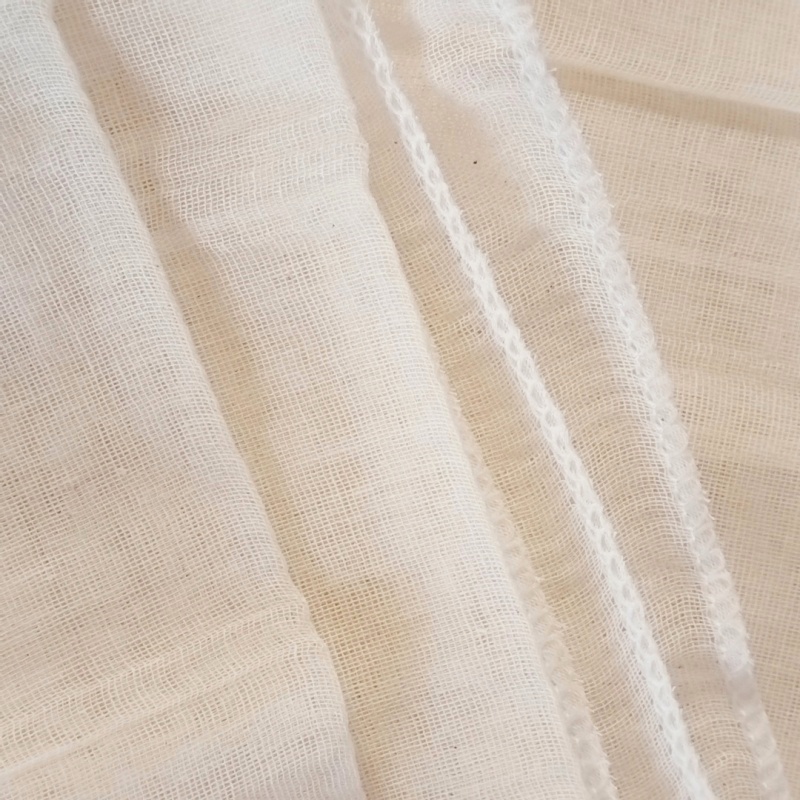
Industrial backing cloths use 100% natural cotton. Manufacturers weave these fibers into a plain, open-weave grid. This straightforward construction eliminates unnecessary bulk. The raw fibers remain unbleached and untreated in most cases. This minimal processing preserves the natural strength of the cotton yarns. It also ensures the fabric remains highly adaptable to various industrial glues.
The open cotton mesh fabric structure offers two massive manufacturing advantages. First, it allows for superior air circulation deep inside the furniture. Second, the grid-like gaps create a highly stable, grippy surface. Adhesives easily penetrate these open pores. Secondary layers bond seamlessly during composite manufacturing. The mechanical lock formed by the glue and the mesh prevents layer separation over time.
Environmental compliance deeply impacts the modern home textile fabric sector. Regulators continually tighten rules around synthetic waste. As an unbleached, biodegradable natural fiber, pure cotton gauze aligns perfectly here. It leaves zero microplastic footprint. Once a piece of furniture reaches its end of life, the natural cotton backing safely decomposes. This eco-friendly trait strongly appeals to sustainable furniture brands and conscious consumers alike.
Engineers base material selection on hard data, not just assumptions. The physical properties of industrial gauze make it uniquely suited for heavy-duty furniture construction. It perfectly balances weight, strength, and airflow dynamics.
You might assume a lightweight fabric lacks durability. Industrial gauze proves this wrong. These backings are extremely lightweight. They commonly weigh around 25gsm (grams per square meter) for upholstery use. However, mills use tightly twisted yarns, such as the 45S specification. This specialized twisting technique drastically increases durability. The fabric easily achieves up to 300 N of tensile strength. This impressive resistance prevents premature tearing when workers pull the fabric tight over wooden frames.
Furniture frames require constant ventilation. Blocked airflow leads to severe internal damage. Pure cotton mesh excels at managing these internal climates.
Superior Breathability: Data indicates pure cotton mesh breathes up to 41% more efficiently than synthetic polyester equivalents. Air moves freely through the open grid.
Moisture Regulation: Natural cotton features high hydrophilicity. The fibers can absorb up to 27 times their own weight in moisture. This acts as a natural humidity regulator inside closed furniture systems. It actively prevents moisture buildup inside dense foam cushions.
Premium, hypoallergenic furniture demands non-toxic materials. Synthetic chemical backings often off-gas volatile organic compounds (VOCs). Unbleached cotton completely avoids this risk. It yields a Primary Irritation Index (PII) of exactly 0.01. Experts categorize this score as negligible or zero irritation. This makes it exceptionally safe for homes. Furthermore, advanced manufacturers now explore herbal and antimicrobial finishes. These natural treatments actively prevent internal microbial growth without adding harmful chemicals.
Manufacturers integrate this material across several critical production stages. Its versatility solves multiple structural challenges. Below are the four primary applications.
Lamination and Composite Reinforcement: Workers use it as a stabilizing backing layer. They bond it directly behind delicate or stretch-prone top upholstery fabric like velvet, thin linens, or faux leathers. The grid structure reinforces the top layer. This completely prevents sagging and seam slippage under heavy human weight.
Breathable Dust Covers (Cambric Alternative): Look under any high-quality sofa. You will see a bottom cover. Makers apply this gauze to the underside of sofas and chairs. Its porous design blocks household dust and pests. Simultaneously, it allows internal wood frames and foam to expel trapped air when someone sits down.
Cushion Inner Wrapping: Raw foam blocks and down-feather fillings require encasement. Factories use cotton mesh gauze to wrap these inserts before applying the final decorative cover. The slight natural friction of the cotton yarns grabs the outer fabric. This crucial friction prevents the top cover from sliding, wrinkling, and twisting over time.
Wallpaper and Wall Upholstery Backing: Interior designers frequently use upholstered walls for acoustic benefits. This gauze serves as an excellent paste-gripping substrate. It creates a stable bridge between the heavy decorative wall textile and the adhesive paste applied to the drywall.
Sourcing teams face numerous choices when selecting backing materials. Understanding the direct comparisons helps you make informed, long-term procurement decisions.
Some buyers confuse fine cotton muslin and open gauze. They serve entirely different functions. Fine cotton muslin features a very tight weave. It is excellent for heavy drapes or formal event linens. It blocks light and holds firm shapes. Conversely, the loose weave of industrial gauze is highly specific. Manufacturers require this loose structure where high breathability and deep adhesive penetration are absolutely non-negotiable. Tight muslin blocks glue. Open gauze invites it.
The industry constantly debates natural versus synthetic backings. Let us evaluate the practical differences.
Polypropylene (Spunbond): This is the cheaper synthetic alternative. However, it traps heat inside furniture. Worse, it degrades and flakes into powder over time under constant friction.
Cotton Gauze: This carries a slightly higher initial cost. However, it guarantees long-term structural flexibility. It ensures zero microplastic shedding inside homes. It also provides superior, permanent bonding in glue-heavy lamination processes.
Industrial buyers must carefully evaluate width specifications. Buying a standard gauze fabric roll requires planning. You should seek rolls measuring 1140mm or wider. Wide formats minimize necessary seams. They drastically reduce fabric waste during large-scale automated cutting processes. Wider rolls translate directly to faster production lines.
Material Type | Breathability | Adhesive Bond Strength | Long-Term Durability | Environmental Impact |
|---|---|---|---|---|
Cotton Mesh Gauze | Excellent (Open Grid) | Very High | High (No flaking) | Biodegradable / Zero Microplastics |
Spunbond Polypropylene | Low to Moderate | Moderate (Surface only) | Low (Flakes over time) | Synthetic / Sheds Microplastics |
Tightly Woven Muslin | Low | Low (Glue cannot penetrate) | High | Biodegradable |
Even premium materials present manufacturing challenges. Understanding these risks upfront prevents costly production errors. You must adapt your workshop practices to handle this specific textile correctly.
Due to the open-weave structure, raw edges remain highly susceptible to fraying. If you handle cut pieces roughly, the yarns will unravel.
Best Practice: Use sharp rotary cutters instead of standard scissors.
Best Practice: Implement heated or sealed cutting dies for automated lines.
Common Mistake: Leaving tiny seam allowances. You must ensure wide, sufficient seam allowances when stitching to prevent the threads from pulling out under tension.
Natural cotton fibers inherently shrink when exposed to wet treatments or high heat. This natural characteristic demands careful planning. If you subject the base cloth to wet lamination processes, it will contract. If you design washable slipcovers, shrinkage becomes a major risk. Pre-shrinking the fabric is mandatory. Sourcing pre-shrunk rolls directly from the mill saves significant time. If you ignore this step, the backing will shrink later and cause severe puckering on the visible top fabric.
When used as an upholstery base cloth for lamination, you must strictly calibrate your adhesive viscosity. The open mesh design is a double-edged sword. It grabs glue perfectly, but it also allows very thin glues to bleed straight through. If the glue bleeds through, it will permanently stain the top-tier textile. Always run test batches. Thicken your adhesives just enough to grip the mesh without fully penetrating the outer decorative layer.
Sourcing the right structural base cloth represents a critical engineering decision. It is never just a simple line-item expense on a spreadsheet. Cotton gauze offers a verifiable mix of high tensile strength, supreme breathability, and natural adhesive compatibility. It actively protects foam from mold and prevents seam failures. Synthetics may look cheaper initially, but their long-term degradation harms your brand reputation.
To upgrade your manufacturing process, your procurement teams should request unbleached, 25gsm/45S specification samples. Conduct localized stress-and-lamination tests against your current synthetic backings. Validating this ROI through direct testing will clearly demonstrate the performance upgrades. Switch to natural mesh to future-proof your furniture designs against early structural failure.
A: The base cloth is completely hidden underneath or bonded directly behind the main fabric. It provides crucial structural support, prevents stretching, and manages internal airflow. The main fabric simply provides external aesthetic value and surface wear resistance.
A: It can shrink if exposed to excessive moisture or heat. For fixed indoor upholstery, this is rarely an issue in climate-controlled environments. However, for washable slipcovers, the gauze must be pre-shrunk before manufacturing begins.
A: Cotton mesh allows for superior air circulation, which actively prevents mold in foams. It is fully biodegradable. It creates a much stronger mechanical bond during glue lamination. Most importantly, it will not flake or degrade into microplastics over a 10-year lifespan.
A: Only if it is specially treated. Untreated natural cotton retains moisture and easily harbors mildew if constantly exposed to rain and elements. For outdoor use, you require synthetic meshes or heavily treated antimicrobial cotton.


