Jumbo Roll Scrim Backing Fabric

- All
- Product Name
- Product Keyword
- Product Model
- Product Summary
- Product Description
- Multi Field Search
Views: 0 Author: Site Editor Publish Time: 2026-11-09 Origin: Site


Corporate events increasingly demand immersive, mixed-reality presentations. Audiences expect life-sized virtual speakers and floating 3D graphics. However, poorly executed holographic illusions fail often. The illusion of a hologram depends entirely on the physical projection surface. Selecting the wrong material ruins the effect instantly. You might see visible seams, poor image retention, or low contrast. Blinding "shine-through" from the projector can easily break audience immersion. You need a structured framework to evaluate and select the correct holographic projection screen fabric for conferences. This guide covers venue constraints, lighting conditions, resolution requirements, and specific AV rigging demands. We will walk through the exact technical specifications needed to pull off a flawless mixed-reality stage setup without relying on guesswork.
Material dictates the illusion: The choice between mesh, scrim, and foil directly impacts the balance of transparency (invisibility of the screen) and gain (brightness of the projected image).
Lighting control is non-negotiable: Holographic effects require strict ambient light management; even the highest-grade fabric will fail in heavily backlit or uncontrolled environments.
Tensioning and rigging are critical: A flawless 3D effect requires perfectly flat, tensioned surfaces; fabric stretch, "drop" allowances, and mounting hardware must be factored into the initial material selection.
Portability and maintenance drive ROI: Stretchy, foldable fabrics offer superior portability and easier maintenance compared to rigid foils, significantly reducing long-term event production costs.
Compliance matters: All indoor event fabrics must meet strict local fire retardancy certifications (e.g., NFPA 701, DIN 4102 B1) to be legally deployed in conference venues.
The modern "Pepper's Ghost" effect relies on highly transparent surfaces. These surfaces reflect or catch projected light effectively while allowing background elements to remain visible. You want live speakers or physical stage props to show clearly behind the digital content. This creates a true mixed-reality experience. The fabric must hold the light precisely where the image appears and vanish everywhere else. Achieving this requires precise material selection. You cannot simply use standard projection screens because they block the background entirely. The setup acts as a visual filter. The audience sees the illuminated pixels but looks right through the unlit negative space. You must maintain at least two meters of depth between the screen and the live presenters to prevent light spill from hitting the people behind the mesh.
Venue lighting dictates your screen material choices. Stage wash, house lights, and bright LED walls all introduce ambient light. This light competes directly with your projector. Strict ambient light management is mandatory for a convincing hologram. You must evaluate the required opacity and color of the screen material based on the room. Darker rooms allow for highly transparent black scrims. Brighter environments demand materials with higher gain to punch through the ambient light. You should always measure the stage lighting with a lux meter during rehearsals. Keep moving heads and front washes focused strictly on the downstage edge, away from the projection surface. Any stray light hitting the mesh will illuminate the fabric itself, instantly destroying the illusion of empty space.
High-resolution projection requires a specific weave density. If you project 4K or HD content, the fabric texture must not distort fine details. A weave that is too open loses pixels. The light simply passes through the holes. This makes detailed graphics or text look soft and ruins the scale of life-sized virtual presenters. You must match the material's thread count to your projector's resolution capabilities. Hexagonal weaves often hold pixels better than square weaves. This prevents the jagged edges commonly seen on lower-quality screens. Proper scale ensures the virtual human looks natural next to a live presenter. When using 30,000-lumen laser projectors, a tighter weave prevents the beam from blowing out the image and causing halation around the edges of your graphics.
Conference seating arrangements dictate the required viewing cone. Attendees sitting on the far left or right must see the same quality image as those in the center. The width of the seating area impacts how the fabric reflects light. Some materials have a narrow viewing angle, causing severe image degradation for people on the periphery. You must select a fabric that disperses light evenly across the entire audience area. Test the material from extreme off-axis angles before finalizing your stage design. A steep drop-off in brightness ruins the experience for half the room. If your ballroom setup is exceptionally wide, you may need to curve the truss slightly or use a material with a certified half-gain angle of at least 60 degrees.
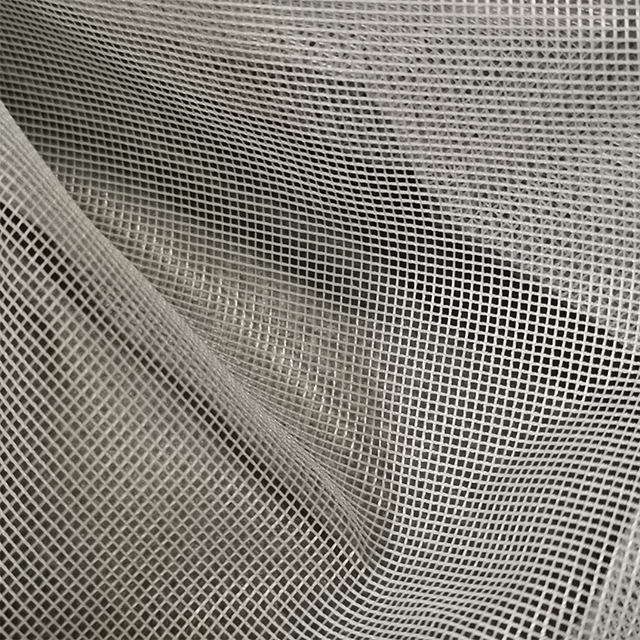
When planning your stage setup, selecting the right 3D projection screen material for event displays is your most impactful decision. Different materials serve entirely different staging environments. You must match the fabric to the room's specific lighting profile.
High-brightness environments require materials that maximize light return. A white indoor projection mesh fabric excels here. It prioritizes image punch over total screen invisibility. The white threads catch maximum lumens, making the hologram pop even under heavy stage lighting. However, the screen itself remains slightly visible to the audience. You must design your lighting to minimize this visibility by keeping the area immediately around the screen as dark as possible.
Contrast this with black scrim. Black scrim offers superior transparency in dark environments. It practically vanishes against a dark stage background. The trade-off is light retention. Black threads absorb light rapidly. You need significantly higher projector lumen output to achieve a bright image on black scrim. Often, this requires stacking multiple 20,000-lumen projectors and perfectly aligning their grids to double the brightness on the surface.
Finding the middle ground is often the best approach for unpredictable venues. Grey polyester screen fabric for conferences provides an optimal balance. It offers better black levels and contrast than white mesh while retaining more light than black scrim. Grey fabric handles moderate ambient light well while maintaining a strong illusion of invisibility. This makes it a highly versatile choice for corporate tours moving between different ballrooms. It forgives minor lighting mistakes better than white or black alternatives. Grey mesh acts as the workhorse of the AV industry, providing reliable results without requiring extreme projector stacking or total blackout conditions.
Rigid polymer foils represent the traditional holographic film approach. They offer absolute transparency. However, they are incredibly fragile and difficult to transport. A single crease ruins the entire roll. You must transport them in massive, rigid tubes that often require dedicated freight trucks. Woven synthetic fabrics provide a much better alternative for live events. The stretchy nature of woven yarns makes them significantly easier to rig. You can tension them quickly across large trusses without fear of snapping.
It is also worth contrasting indoor holographic mesh with heavy-duty PVC vinyl screens. PVC vinyl screens are highly durable and weather-resistant. They work perfectly for outdoor events. However, PVC lacks the transparency required for mixed-reality illusions. You cannot see through it. This makes PVC useless for holographic effects where live action happens behind the screen.
Material Type | Transparency Level | Image Brightness (Gain) | Ideal Environment | Projector Lumen Requirement |
|---|---|---|---|---|
White Mesh | Low | High | High ambient light venues, trade shows | Standard to High (10k - 15k) |
Grey Polyester | Medium | Medium | Mixed lighting, unpredictable stages | High (15k - 20k) |
Black Scrim | High (Nearly Invisible) | Low | Dark rooms, controlled theatrical lighting | Ultra-High (20k+ Stacked) |
Polymer Foil | Maximum | High | Permanent installations, controlled studios | High (Requires precise angles) |
Event producers must weigh several technical factors when choosing holographic projection fabric for corporate events. You cannot base this decision on aesthetics alone. The physics of light and the physical constraints of the venue dictate the final choice.
Every holographic setup involves a fundamental trade-off. You must balance transparency and gain. Transparency refers to how much light passes through the fabric. High transparency makes the screen invisible. Gain refers to how much light reflects back to the viewer. High gain makes the image bright. You cannot maximize both simultaneously. A highly transparent screen requires massive projector power. A high-gain screen becomes visible to the audience. You must find the exact ratio that fits your venue lighting. Test swatches on-site to find this balance. Shine a flashlight through the swatch while holding it against the actual stage backdrop to see how much light it kicks back versus how much it lets through.
Visible seams instantly destroy the 3D illusion. If the audience sees a line running down the middle of the hologram, the magic is gone. The seam catches light differently than the rest of the mesh, creating a glowing vertical or horizontal line. Large-scale stages often require seamless widths of 5 to 10 meters. This makes sourcing custom width projection screen fabric for events absolutely necessary. Standard fabric rolls are too narrow for arena stages.
You must also calculate the "drop" accurately. Drop is extra fabric added to the top or bottom of the screen. This extra material hides rigging hardware. It also provides a clean visual bleed area for the projectors. Proper drop calculation ensures the audience only sees the intended holographic content. Always order at least one extra meter of drop for safety. If your viewable area is 4 meters high, order a 5-meter drop to allow for wrapping around the truss and securing the bottom pipe pocket.
Safety compliance is mandatory. All indoor conference materials must meet strict safety certifications. Look for ratings like NFPA 701 or DIN 4102 B1. Venue safety officers will inspect your rigging. They will reject non-certified imported fabrics immediately. Never risk your event on uncertified materials. Always request the fire certificate from your supplier before purchasing. Keep a physical copy of this certificate at the front of house during the event. Inspectors will ask for it during load-in. If the fabric is treated with a topical fire retardant rather than being inherently flame retardant (IFR), you must ensure it hasn't lost its rating due to washing or heavy use.
Projector placement geometry dictates the success of your setup. Multi-projector setups maximize brightness and coverage. Using one projector per side is a common strategy. However, you must manage the risk of "shine-through." Shine-through happens when the projector beam hits the audience's eyes or illuminates the back wall. This instantly ruins the illusion and blinds the front row.
Rear projection staging solves many of these issues. It keeps the inside stage area clean of shine-through light. You pair rear projection with steep projection angles and ultra-short-throw (UST) lenses. You also drape dense blackout cloth in the background. Blackout cloth is a dense, opaque fabric designed to prevent light from passing through. It absorbs stray light perfectly, enhancing the holographic contrast. You must ensure the blackout cloth covers the entire projection cone path. If you must use front projection, mount the projectors high on the downstage truss and aim them steeply downward so the excess light hits the stage floor, which should be covered in matte black carpet.
A flawless hologram requires a perfectly flat surface. Any wrinkle or wave will distort the projected image, making your virtual presenter look like they are underwater. Four-point tensioning systems are mandatory. You must stretch the fabric evenly across the entire frame.
Start by securing the top edge of the fabric to the main truss using heavy-duty bungee ties spaced every 15 centimeters.
Raise the truss to the working height and insert a heavy steel pipe into the bottom pocket of the fabric to provide uniform downward weight.
Secure the left and right sides to vertical truss towers, pulling the fabric taut to eliminate any hourglass warping in the center.
Adjust the side tension incrementally until the surface is drum-tight and completely free of ripples.
The stretch coefficient of the fabric impacts your rigging choices. Highly stretchy materials work well with bungee ties and standard trussing. Less forgiving materials might require custom frames to achieve the necessary tension without tearing. You must also consider HVAC systems. Air conditioning vents blow air across the stage. This air moves loose fabric. You must weight the bottom of the screen heavily to prevent swaying.
Finding a reliable supplier for wholesale conference projection screen fabric requires strict vetting. You should always request physical samples first. Test these swatches with your actual projectors in a dark room. Verify batch consistency if you order multiple rolls. Slight color variations between rolls will show up under projection, creating a mismatched stage look. Check lead times carefully, especially for custom cuts and finishing. Rushed shipping on heavy fabric rolls destroys production budgets. Ensure the supplier finishes the edges with reinforced webbing and grommets to prevent the fabric from tearing under heavy tension.
Lifecycle costs matter for event production companies. Delicate polymer foils are highly susceptible to scratching and creasing. They require massive roll tubes for transport. They are often treated as single-use items. This drives up the cost per event significantly.
Robust, foldable polyester meshes offer superior portability. You can fold them, pack them in standard road cases, and transport them easily. Many synthetic woven surfaces can be gently cleaned with mild soap. This removes setup smudges and dust. Use cold water and avoid harsh chemicals. Proper maintenance extends the lifespan of the investment across multiple events. Dry the fabric completely before packing it away to prevent mildew. When folding the mesh, avoid creating hard creases. Roll it loosely inside the road case or fold it with soft, rounded edges to ensure it tensions out perfectly flat at the next venue.
Audit the venue's ambient lighting and HVAC airflow to determine the exact opacity and weight required for your screen material.
Calculate the maximum seamless width and add at least one meter of "drop" to hide all rigging hardware from the audience's line of sight.
Order a 1x1 meter test swatch and conduct a live projection test using the exact projector model and lens intended for the show.
Obtain and file the physical fire retardancy certificates (NFPA 701 or DIN 4102 B1) to present to the venue safety officer during load-in.
Design a rear-projection layout with ultra-short-throw lenses and matte black floor carpeting to eliminate projector shine-through.
A: Grey is typically best for balancing contrast and transparency. Black is best for total invisibility in dark rooms, though it requires very bright projectors. White yields the brightest image but is the most visible as a physical screen to the audience.
A: Use steep projection angles, either from the floor pointing up or the ceiling pointing down. This ensures excess light hits an unpopulated area. Utilize rear projection setups and hang light-absorbing blackout cloth on the background to catch stray beams.
A: Yes. Woven polyester and mesh fabrics can be folded, transported easily, and reused. You can even clean them with mild soap if handled carefully. Rigid holographic foils, however, are easily creased and often treated as single-use or permanent installations.
A: Projection mapping involves projecting video onto opaque, 3D physical objects or architectural surfaces to change their appearance. Holographic projection uses flat, transparent screens to create the illusion of floating 3D objects or people in mid-air.
A: Specialized event fabric manufacturers can produce seamless mesh and scrim rolls up to 9 to 12 meters (30 to 40 feet) wide. This massive width is critical for large conference stages to avoid illusion-breaking lines down the center.
A: Yes. The density of the weave impacts how well the fabric holds high-resolution pixels. A weave that is too open may cause 4K or HD images to look pixelated or soft. Testing a swatch with your specific projector is highly recommended.


