Jumbo Roll Scrim Backing Fabric

- All
- Product Name
- Product Keyword
- Product Model
- Product Summary
- Product Description
- Multi Field Search
Views: 0 Author: Site Editor Publish Time: 2026-06-10 Origin: Site


In industrial composite manufacturing, the structural integrity of the final product is heavily dictated by the quality and composition of its foundation layer. The end product will inevitably fail under stress if you select an incompatible substrate. Manufacturers frequently face delamination, poor dimensional stability, or inadequate tensile strength. These critical issues arise mainly when mismatched substrates are paired with advanced polymers like PVC, TPU, or rubber. You need a reliable base to anchor these heavy-duty coatings. This guide breaks down the engineering characteristics of polyester-cotton woven materials. We provide a clear framework for evaluating them as an industrial laminate base cloth for high-stress applications. You will discover exactly how hybrid blends solve complex adhesion challenges. Readers will also learn how to navigate manufacturing risks to ensure long-lasting performance.
Polyester-cotton blends strategically combine the high tensile strength of synthetic fibers with the superior mechanical adhesion properties of natural cotton.
Material selection must balance weight, weave construction, and processing constraints (such as moisture control) to prevent delamination.
Proper vetting of laminate base fabric requires rigorous peel-strength and tear-resistance testing under simulated operational environments.
Begin by framing the core business problem. Pure synthetic fabrics often struggle with adhesive penetration. They lack the porous surface needed for polymers to grip. Conversely, pure natural fibers lack physical durability. They degrade quickly in heavy-duty industrial environments. They cannot handle extreme operational tension.
We solve this dilemma through a hybrid engineering approach. The polyester-cotton blend creates a highly effective substrate. It combines two distinct material strengths seamlessly.
Here is how the hybrid solution functions:
Polyester component: It delivers high tensile strength. It provides necessary tear resistance for heavy loads. It also guarantees excellent resistance against chemical degradation over time.
Cotton component: It provides critical surface porosity. It adds essential micro-texture to the yarn. This allows liquid polymers to achieve deep mechanical interlocking. They bond tightly during the coating or calendering process.
This engineering logic yields specific target outcomes. You achieve significantly higher peel strength. We see improved dimensional stability under thermal stress. You also reduce the need for expensive chemical adhesive promoters. The blend balances operational cost and mechanical reliability perfectly.
Engineers must apply strict evaluation criteria during material selection. You need to assess mechanical specifications first. Tensile and tear strength matter immensely. You must evaluate warp and weft breaking strengths. They must match specific end-use load requirements. High-tension applications require robust warp yarns.
Next, consider adhesion or peel strength. This dictates how well the woven construction bonds. It influences the connection between the reinforced cloth and the polymer matrix. Weave openness directly impacts this molecular bond.
Physical properties also require close inspection. You must evaluate weight (GSM) and material thickness. We must balance structural rigidity with physical flexibility. Conveyor belts need stiffer bases. Tarpaulins or technical inflatables require greater pliability.
Weave architecture plays a major role. You must compare plain, twill, and panama weaves. Your choice depends entirely on the required drape. It also dictates the penetration depth of the liquid laminate.
Weave Type | Flexibility (Drape) | Polymer Penetration | Best Industrial Application |
|---|---|---|---|
Plain Weave | Moderate | Good | Standard tarpaulins, basic protective covers. |
Twill Weave | High | Excellent | Technical inflatables, complex curved structures. |
Panama Weave | Low (Stiff) | Very High | Heavy-duty conveyor belts, rigid tents. |
Finally, analyze thermal and chemical tolerances. You must assess the material behavior under high heat. Extrusion or lamination machines generate immense thermal stress. A reliable laminate base fabric maintains dimensional stability here. It prevents unwanted warping during continuous high-speed production.
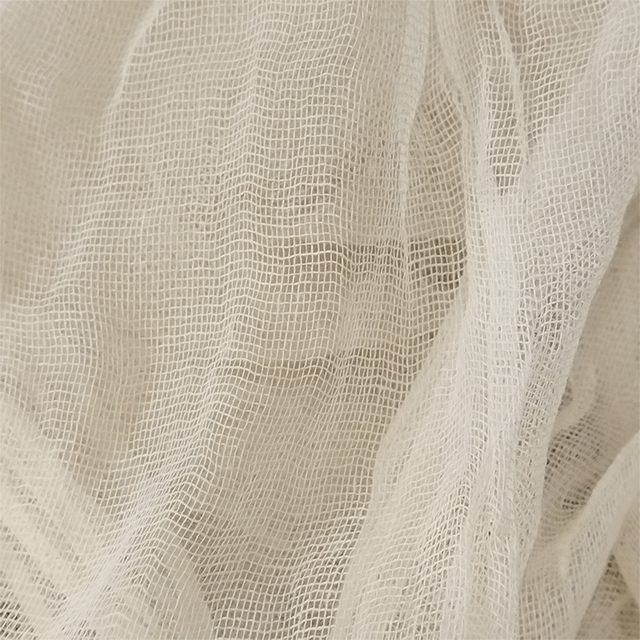
Material comparison helps define optimal application scenarios. Let us compare woven poly-cotton against other common substrates.
Woven Poly-Cotton vs. Pure Polyester
Poly-cotton requires fewer chemical adhesion promoters. The natural cotton fibers absorb liquid polymers easily. Pure polyester, however, offers superior moisture resistance. It excels in consistently wet, unsealed environments.
Woven Poly-Cotton vs. Fiberglass
Fiberglass offers unmatched thermal resistance. It survives extreme heat effortlessly. However, it lacks flexibility. It cannot provide the flex-fatigue resistance of a poly-cotton industrial textile. Poly-cotton bends continuously without snapping or fraying.
Woven Blends vs. Composite Material Mesh
Woven poly-cotton provides a continuous surface. It works beautifully for solid lamination. Conversely, an open composite material mesh is structurally different. It features large gaps between intersecting yarns. A mesh is better suited for strike-through encapsulation applications.
We can summarize this in a practical decision matrix chart.
Alternative Material | Key Advantage | Major Limitation | Use Case Verdict |
|---|---|---|---|
Pure Polyester | Excellent water resistance | Requires chemical adhesion promoters | Choose for unsealed marine applications. |
Fiberglass | Extreme thermal stability | Very poor flex-fatigue resistance | Choose for static high-heat shielding. |
Poly-Cotton | Superior coating adhesion | Retains moisture if not pre-dried | Choose for high flexural endurance. |
Rule out poly-cotton if the end-product faces continuous, unsealed underwater exposure. Shortlist it if the application demands high flexural endurance. It remains the ideal choice for superior coating adhesion.
Manufacturing teams face specific risks during lamination. Moisture absorption stands out as a primary concern. Cotton is highly hydrophilic. It pulls moisture from the ambient air constantly. Base fabrics must be properly stored. You should keep them in climate-controlled environments.
You must potentially pre-dry them before lamination. Trapped moisture will vaporize during hot-melt or extrusion processes. Expanding steam causes surface blisters immediately. It ultimately leads to severe delamination in the field.
Shrinkage and tension control represent another major hurdle. Woven poly-cotton exhibits variable shrinkage rates. Warp and weft threads often shrink differently during thermal processing.
Mitigation strategy: You must establish strict tension-control parameters. Implement these on the calendering line immediately. Use precise load cells and dancer rollers. Furthermore, require pre-shrunk specifications from your supplier. Heat-set fabrics drastically reduce unexpected dimensional changes.
Contamination risks also demand serious attention. Natural fibers can introduce lint into the processing line. They might shed microscopic particulate matter. Quality assurance must include thorough inspections. Conduct visual or automated checks of the raw fabric. Do this prior to compounding to prevent hidden coating flaws.
Common Mistakes to Avoid:
Skipping the pre-drying phase before high-temperature extrusion.
Applying uniform tension across warp and weft despite asymmetrical weave properties.
Storing raw rolls directly on concrete floors where moisture gathers quickly.
Ignoring lint buildup on guide rollers during long production runs.
Procurement requires strict vetting procedures. You must evaluate supplier capabilities thoroughly. Look for manufacturers who control multiple production stages. They should handle both spinning and weaving processes in-house. This ensures consistent blend ratios across batches. Standard ratios typically include 65/35 or 50/50 Poly/Cotton.
You must verify batch-to-batch consistency. Measure the GSM carefully upon delivery. Check the weave density using automated optical tools. Variations here will derail your coating consistency entirely.
Regulatory and compliance checks are non-negotiable. Ensure the textile production complies with global environmental standards. Verify OEKO-TEX or REACH certifications actively. This step is critical if your final laminate targets European markets. Consumer-facing industries strictly enforce these safety and compliance mandates.
Next-Step Actions for Procurement:
Request sample yardage for pilot-line testing instead of relying solely on datasheets.
Conduct internal peel-adhesion tests to simulate real-world operational stress.
Perform flex-cracking tests in specialized climate-controlled chambers.
Finalize the commercial-scale volume commitment only after passing rigorous pilot runs.
The final verdict is clear. Polyester-cotton woven material remains a highly reliable substrate. It is perfect for applications requiring balanced mechanical traits. It offers immense tensile strength and impressive physical flexibility. Above all, it provides exceptional layer adhesion for complex polymers.
You must base your final procurement decision on empirical evidence. Rely heavily on pilot-run data. Monitor moisture-related defects closely. Track peel strength consistency across multiple production batches to guarantee quality.
Actionable Next Steps:
Audit your current lamination failures to see if poor mechanical adhesion is the root cause.
Request 65/35 poly-cotton samples from verified, fully integrated textile mills.
Upgrade your storage facilities to maintain low ambient humidity for hydrophilic fabrics.
Implement automated tension control upgrades on your extrusion or calendering lines.
A: The standard ratio is 65% polyester to 35% cotton. This specific blend perfectly balances high tensile strength with reliable mechanical adhesion. However, a 50/50 ratio is frequently used when maximum softness is required. The higher cotton content also prioritizes deeper polymer penetration during the coating process.
A: Cotton absorbs ambient moisture easily. During high-heat extrusion coating, this trapped moisture rapidly turns into steam. The steam expansion causes blistering beneath the polymer layer, ultimately leading to severe delamination. Manufacturers must implement strict pre-drying protocols to eliminate moisture before the fabric enters the hot-melt stage.
A: Yes, they can successfully replace fully synthetic options outdoors. However, the lamination process must completely encapsulate the poly-cotton fibers. Unsealed edges will allow the cotton component to wick water inward. Proper encapsulation prevents water ingress and completely stops subsequent mildew growth within the natural fibers.


