Jumbo Roll Scrim Backing Fabric

- All
- Product Name
- Product Keyword
- Product Model
- Product Summary
- Product Description
- Multi Field Search
Views: 0 Author: Site Editor Publish Time: 2026-08-27 Origin: Site


The most common failure point in commercial wallcoverings is rarely the decorative vinyl face. It is the mechanical failure of the backing material beneath it. Specifying the wrong backing material for commercial spaces leads to premature delamination, moisture entrapment, and the telegraphing of wall imperfections. These failures trigger costly replacement cycles that inflate long-term lifecycle costs. To prevent installation failures, ensure long-term durability, and maximize wall protection, buyers must evaluate vinyl wallcovering scrim backing based on material composition, tensile strength, adhesive compatibility, and environmental compliance. Getting this specification right the first time keeps projects on schedule and prevents callbacks.
Application Scope: Scrim is a lightweight, open-weave backing optimized for light-to-medium traffic areas (typically Type I wallcoverings), offering a cost-effective alternative to heavier Osnaburg or Drill backings.
Material Impact: The choice between a 100% polyester scrim backing and a poly-cotton blend dictates the material's moisture resistance, flexibility, and tensile strength.
Installation Dependency: Successful application requires matching the specific woven scrim fabric to the correct adhesive properties (wet-tack, solids content, open-time) and ensuring rigorous, specific substrate preparation.
Supplier Verification: A reliable scrim supplier must provide consistent batch-to-batch weave density and verifiable documentation for commercial fire ratings (e.g., ASTM E84).
Scrim is a lightweight, open-weave fabric designed specifically for structural reinforcement. Manufacturers engineer this material to support the decorative vinyl layer above it. The physical characteristics of scrim include a grid-like pattern of intersecting threads. This open structure keeps the overall weight low while providing essential tensile strength. The primary function of this material is to stabilize the vinyl face. It prevents the surface from stretching or tearing during installation and daily use.
The open weave creates a mechanical bond. When installers apply paste, the adhesive penetrates the gaps in the fabric matrix. This allows the adhesive to grip both the wall substrate and the PVC face simultaneously. This interlocking action prevents sheer stress failures. Without this matrix, the vinyl would easily peel away from the wall under its own weight. The backing acts as the bridge between the wall and the decorative surface.
A stable backing directly supports the inherent cleanability of the vinyl face. Commercial environments require frequent cleaning and scrubbing. The backing prevents structural shifting or stretching during routine maintenance. It anchors the vinyl firmly, allowing maintenance teams to scrub the surface without distorting the pattern. This stability maintains the aesthetic and functional integrity of the wall protection system over time.
You must establish baseline success criteria when evaluating wallcovering scrim backing. These metrics determine long-term viability on the wall.
Dimensional Stability: The material must resist shrinking or stretching when exposed to adhesive moisture and temperature changes.
Tear Resistance: The fabric must withstand the pulling forces applied during the hanging process, especially around outside corners.
Ease of Strippability: The backing should allow the wallcovering to be removed cleanly during future renovations without destroying the drywall face paper.
Adhesive Saturation: The weave must be open enough to accept paste but tight enough to prevent the adhesive from bleeding through to the decorative face.
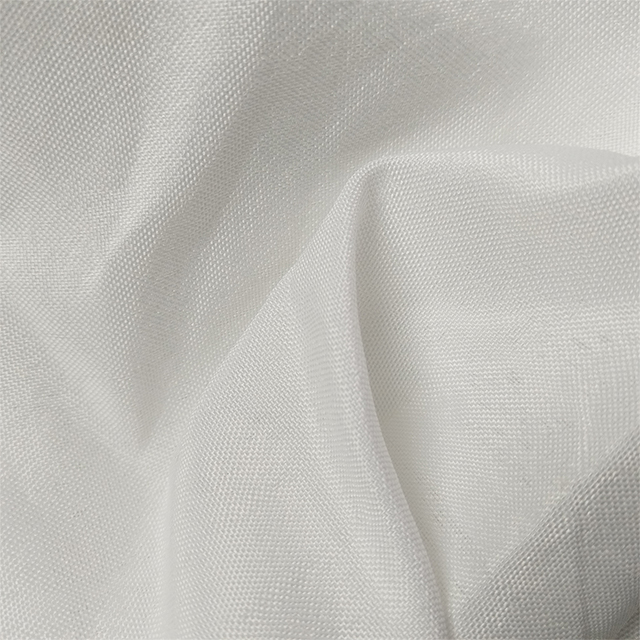
Synthetic materials dominate modern commercial wallcovering reinforcements. A polyester scrim backing offers a distinct performance profile. It delivers exceptionally high tensile strength relative to its weight. Polyester provides superior dimensional stability, meaning it will not warp when wet with heavy-duty adhesives. Synthetic fibers possess an inherent resistance to mildew, mold, and rot. They do not provide a food source for fungal growth behind the wallcovering.
The best use case for pure polyester involves environments with fluctuating humidity. Spaces like hotel corridors, healthcare facilities, and coastal properties benefit from this material. In these areas, synthetic, non-absorbent materials are strictly required to prevent degradation. Polyester ensures the backing remains structurally sound even if ambient moisture levels rise. It is the default choice for modern, high-performance commercial installations where longevity is the primary goal.
Blended materials offer a compromise between synthetic strength and natural flexibility. A poly-cotton blend combines the high tensile strength of polyester with the adhesive absorbency of cotton. This performance profile aligns with Wallcoverings Association (WA) standards for lightweight, open-weave fabrics. The cotton fibers absorb the adhesive paste, creating a very aggressive initial grip. The polyester fibers ensure the material does not tear under tension when installers pull the drops tight.
You should specify a blended woven scrim fabric for complex installations. These blends provide higher flexibility, making them easier to wrap around outside corners, columns, and architectural reveals. They offer improved wet-tack adhesion during the hanging process. Installers often prefer blends because the material is highly workable. The natural fibers hold the paste longer, giving the installer more time to position the drop perfectly on the wall before the adhesive sets.
Engineered composites represent the heavy-duty tier of backing materials. A PVC composite scrim features a highly engineered structure. In this format, the scrim is fully encapsulated or heavily coated with liquid PVC. This offers maximum structural reinforcement. The encapsulation completely blocks moisture penetration from either direction. It creates an impermeable barrier that protects the substrate from surface moisture and protects the decorative face from wall moisture.
The best use case for composite materials involves highly specialized applications. These environments demand enhanced UV resistance to prevent color degradation. You will use composites where complete moisture barriers are mandated by building codes, such as in commercial washrooms or cleanrooms. They are also suitable for outdoor-grade durability or semi-exterior applications. The heavy coating ensures the structural mesh cannot degrade, even under extreme environmental stress or chemical exposure.
Material Type | Key Performance Strength | Moisture Resistance | Ideal Application Environment |
|---|---|---|---|
100% Polyester Scrim | High tensile strength, dimensional stability | Excellent (Non-absorbent) | Climate-variable commercial spaces |
Poly-Cotton Blend | High flexibility, superior wet-tack adhesion | Moderate (Cotton absorbs moisture) | Complex architectural layouts, columns |
PVC Composite Scrim | Maximum structural reinforcement | Absolute (Fully encapsulated barrier) | High-UV exposure, specialized wet zones |
Evaluating the mechanical strength of a backing requires analyzing the specification sheets. You must look at the warp and weft thread counts. The warp threads run lengthwise down the roll, while the weft threads run horizontally across it. Higher thread counts generally indicate a tighter weave and greater tear resistance. You should verify that the tensile strength meets the minimum requirements for the intended application. A weak weft thread can cause the material to tear horizontally during installation when the paperhanger applies tension.
You must align the backing's structural reinforcement capabilities with the expected traffic volume. Scrim is typically rated for Type I wallcoverings, which are designed for light commercial traffic. This includes hotel rooms, private offices, and low-impact areas. Some heavy-duty scrims can support light Type II classifications for moderate traffic. Specifying a lightweight scrim for a high-traffic hospital corridor will result in rapid mechanical failure. Match the thread density to the physical demands of the space to avoid premature wear.
Moisture management dictates the long-term health of the wall assembly. You must assess the risk of trapped moisture between the vinyl face and the drywall. If moisture enters the wall cavity from the exterior and cannot escape, it will condense behind the impermeable vinyl. This creates an ideal environment for toxic mold growth. The backing material plays a role in how moisture interacts with the adhesive layer and the substrate.
Evaluate micro-venting requirements for your specific project. Some installations require breathable systems to allow wall cavities to dry. Conventional vinyl wallcoverings with solid backings have little to no moisture permeability. They are non-breathable systems. If you use a non-breathable backing, the building envelope must be entirely watertight. You must ensure the HVAC system actively manages interior humidity to prevent surface condensation on the vinyl face.
The interaction between the backing and the adhesive dictates the success of the installation. You must analyze how open-weave structures interact with different adhesive types. High-solids clay adhesives contain less water and provide a stronger, faster grip, making them ideal for heavier goods. Clear strippable adhesives offer easier cleanup but may lack the initial tack required for stiff vinyls. You must evaluate adhesive open-time. This is the duration the paste remains workable before it begins to set. Open-weave fabrics require specific open-times to ensure the paste penetrates the matrix fully without drying out.
Strict surface preparation mandates are non-negotiable for successful adhesion. You must ensure walls are structurally sound and completely dry. The substrate must be entirely free of grease, mildew, dirt, or stains. Any surface contaminant will break the mechanical bond between the adhesive and the wall. Installers must prime the drywall with a high-quality, wallcovering-specific acrylic or PVA primer. This primer seals the porous drywall paper, preventing it from sucking the moisture out of the paste too quickly, and creates a uniform surface for the adhesive to grip.
Addressing existing finishes requires specific protocols. You cannot apply wallcovering directly over glossy surfaces. The requirement to sand gloss or semi-gloss paints to a dull finish is mandatory. Sanding creates a micro-abrasion profile on the wall. This profile ensures proper mechanical grip for the adhesive. If you skip this step, the adhesive will simply slide off the glossy paint, leading to immediate delamination at the seams.
Delamination occurs when the wallcovering separates from the wall. The primary risk factors include incompatible adhesive open-times, poor wet-tack, or insufficient solids content. If the adhesive dries too quickly, it will not form a bond with the backing. If the wet-tack is too low, the vinyl will slide down the wall before the paste cures. Insufficient solids content leads to weak mechanical bonds and severe edge curling at the seams. These failures require complete removal, wall repair, and reinstallation.
You must implement strict mitigation strategies to prevent adhesive failure on the job site.
Mandate on-site mock-up testing before the full installation begins to verify adhesive compatibility.
Verify all adhesive specifications directly with the wallcovering manufacturer's technical department.
Strictly control room temperature and humidity during the installation process, keeping the space between 65°F and 80°F.
Ensure the HVAC system is fully operational at least 72 hours prior to hanging and remains on continuously.
Use seam rollers carefully to ensure the edges are fully bonded without squeezing out all the paste from behind the joint.
Telegraphing is a visual failure where wall flaws show through the vinyl face. The risk is high when using lightweight scrims. These thin backings fail to bridge or hide minor wall substrate flaws. Bumps, gouges, drywall tape lines, or uneven seams will become highly visible under specific lighting conditions, especially in long corridors with wall-wash lighting. Because scrim is thin, it offers zero cushioning. Every imperfection on the wall will transfer directly to the decorative surface, ruining the aesthetic finish.
Mitigating telegraphing requires rigorous wall preparation. You must enforce strict Level 4 or Level 5 drywall finish requirements. A Level 5 finish includes a skim coat over the entire wall surface, creating a perfectly smooth plane. If achieving a Level 5 finish is impossible due to budget or time constraints, you must utilize high-quality wall liners prior to installation. Bridging liners act as a heavy, smooth foundation layer. They cover the imperfections and provide a flawless substrate for the lightweight scrim wallcovering.
Installation Risk | Root Cause | Field Mitigation Strategy |
|---|---|---|
Seam Curling | Low-solids adhesive or poor wall priming | Use heavy-duty clay adhesive; apply acrylic wallcovering primer. |
Telegraphing | Inadequate drywall finish (Level 3 or below) | Mandate Level 5 skim coat or install a heavy bridging liner. |
Blistering/Bubbling | Trapped air or uneven paste application | Use a pasting machine for even distribution; sweep walls thoroughly with a smoothing brush. |
Mold Growth | Moisture trapped behind impermeable vinyl | Fix exterior envelope leaks; use micro-vented goods if specified. |
Your supply chain dictates the quality of your final installation. You must evaluate a scrim supplier based on their manufacturing consistency. Look for strict criteria regarding batch-to-batch consistency. The weave density must remain uniform across thousands of yards. Thread tension must be perfectly calibrated to prevent warping on the roll. If the backing includes a coating, the coating thickness must not vary. Inconsistent materials lead to unpredictable installation behavior, stretching, and visible seam variations.
Requesting and reviewing comprehensive Technical Data Sheets (TDS) is a mandatory step. The TDS provides the empirical data necessary for specification. It lists the exact warp and weft tensile strengths, the fabric weight per square yard, and the material composition percentages. You should never specify a backing material without reviewing its current TDS. A reputable manufacturer will provide this documentation immediately upon request and stand behind their published numbers.
Commercial wallcoverings must adhere to strict life safety codes. Verifying mandatory commercial safety standards is your primary responsibility as a specifier. Specifically, you must check for ASTM E84 compliance. This test dictates the Class A fire rating for flame spread and smoke development. The backing material significantly impacts how the overall wallcovering performs in a fire. The supplier must provide independent laboratory test results proving their material meets or exceeds these life safety requirements.
Environmental compliance is equally critical in modern construction. You must check the material for low-VOC emissions to ensure indoor air quality remains safe for occupants. Verify that the formulations are entirely phthalate-free. Look for recognized sustainability certifications that align with LEED building standards. Specifying environmentally compliant materials protects the end-users and shields the project from regulatory liabilities and failed inspections.
Request physical product samples from the manufacturer to evaluate the weave density, flexibility, and weight firsthand before writing the specification.
Cross-reference the Technical Data Sheet (TDS) to verify that warp and weft tensile strengths meet your project demands and confirm Class A fire ratings.
Consult with both the backing manufacturer and the adhesive supplier to ensure total system compatibility, specifically regarding open-time and solids content.
Mandate a Level 4 or Level 5 drywall finish in the architectural specifications to prevent telegraphing through lightweight materials.
Require a physical mock-up room on the job site to test adhesion, corner wrapping, and visual finish before approving the full rollout.
A: Scrim is a lightweight, open-weave fabric designed for light-to-medium traffic (Type I wallcoverings). It is highly flexible and cost-effective. Osnaburg is a heavier, tightly woven fabric used for high-traffic areas (Type II wallcoverings). Osnaburg provides greater tear resistance and hides wall imperfections better than thin scrim.
A: Yes, provided you specify a 100% polyester backing or a PVC composite. Polyester resists mold and rot, maintaining dimensional stability when exposed to humidity. You must also ensure the building envelope is secure and use mildew-resistant, high-solids adhesives to prevent moisture entrapment.
A: The drywall must be clean, entirely dry, and structurally sound. You must remove all grease, dirt, and mildew. Gloss or semi-gloss paints must be sanded to a dull finish to create a mechanical grip. Finally, the wall must be sealed with a high-quality, wallcovering-specific primer.
A: Open-weave fabrics typically require a high-solids, heavy-duty clear or clay-based adhesive. Open-time matters because it dictates how long the paste remains workable. The adhesive needs sufficient open-time to penetrate the fabric matrix fully, ensuring a strong mechanical bond before the paste begins to cure.
A: The backing material directly influences flame spread and smoke development. High-quality polyester scrims are engineered to melt rather than act as a rapid fuel source. They must be tested as a complete composite system (vinyl plus backing) to achieve a Class A fire rating under ASTM E84.
A: PVC composites are used in highly specialized, demanding environments. They are ideal for areas requiring absolute moisture barriers, enhanced UV resistance, or outdoor-grade durability. The heavy encapsulation protects the structural mesh from severe environmental stress and chemical exposure.
A: No. Because scrim is a lightweight and relatively thin material, it offers no cushioning. It will telegraph bumps, gouges, and uneven drywall seams directly to the surface. You must prepare the wall to a Level 4 or Level 5 finish, or use a bridging liner, to ensure a smooth appearance.


