Jumbo Roll Scrim Backing Fabric

- All
- Product Name
- Product Keyword
- Product Model
- Product Summary
- Product Description
- Multi Field Search
Views: 0 Author: Site Editor Publish Time: 2026-08-13 Origin: Site


In high-volume industrial manufacturing, the structural integrity of composite materials relies entirely on the reinforcement layer. Inconsistent scrim quality directly translates to delamination, product failure, and costly production downtime. Procurement and engineering teams often face a massive disconnect between a supplier's marketing claims and their actual factory capabilities. Delivering lot-to-lot consistency requires precise tension control, advanced binder chemistry, and reliable supply chains for specialized textiles. Material warping or binder pooling on the line can ruin entire production runs before operators even notice the defect.
Selecting the right partner requires moving far beyond unit price. You must evaluate technical transparency, manufacturing capabilities, quality assurance protocols, and supply chain resilience. This guide provides a rigorous framework for vetting partners capable of meeting strict industrial tolerances. We outline exactly how to align fiber characteristics with application demands, assess structural approaches, and mitigate implementation risks during supplier transitions.
Start With the Fiber and Application: Before evaluating partners, clearly define what the fabric needs to do. A qualified supplier will align the fiber choice and weave structure directly with your end-use durability requirements.
Technical Transparency is Non-Negotiable: A reliable manufacturer must provide comprehensive Technical Data Sheets (TDS) detailing fiber denier, weave/laid structure, tensile strength, and binder chemistry.
Application-Specific Engineering: The ideal partner demonstrates expertise in matching scrim structures (woven vs. laid) to specific manufacturing processes, such as compression molding or lamination.
Comprehensive Cost Evaluation Trumps Unit Price: Evaluating scrim suppliers based on defect rates, machine runnability, and dimensional stability yields a more accurate cost assessment than wholesale price per yard.
Risk Mitigation Requires Phased Adoption: Switching suppliers necessitates a structured sampling, prototyping, and pilot-run process to validate adhesion and mechanical performance before full-scale integration.
Every custom fabric project must start by asking what the material needs to do on the production line and in the field. You must differentiate between standard commercial grades and high-tolerance materials required for extreme environments. Industrial applications subject materials to intense thermal stress, chemical exposure, and mechanical tension. A standard apparel-grade mesh will fail immediately under these conditions. Engineers must define the exact processing environment the reinforcement layer will endure. This includes maximum oven temperatures during lamination, the viscosity of the resins applied, and the tension settings on the calendar lines. Documenting these parameters ensures you source a polyester scrim fabric engineered for survivability rather than just basic aesthetics.
To conduct a proper needs assessment, engineering teams should document the following operational realities before contacting any manufacturer:
Maximum processing temperature the fabric will face during coating or lamination.
The specific chemical makeup of the adhesives, PVC, or resins being applied.
The exact line speed and web tension the fabric must withstand without stretching.
The required roll width and maximum roll diameter your unwinding stands can accommodate.
The end-use environmental exposure (e.g., UV radiation, moisture, extreme cold).
You must outline why polyester is the dominant choice over alternatives like nylon or Kevlar for specific applications. Polyester offers superior dimensional stability under heat. It resists stretching during continuous web processing, keeping your production lines running smoothly. Nylon tends to absorb moisture from the ambient environment. When nylon hits a high-temperature coating oven, that trapped moisture vaporizes, causing bubbling and delamination in the final composite. Kevlar provides exceptional tensile strength but carries a prohibitive cost for most standard composites and is notoriously difficult to cut on automated lines. Polyester strikes the optimal balance. It delivers low moisture regain, excellent chemical compatibility with PVC and polyurethane, and overall cost-effectiveness. Establishing these baseline criteria helps you filter out suppliers pushing inappropriate fiber types for your specific manufacturing line.
Detail the exact metrics engineers must demand from manufacturers. Tensile strength dictates how much pulling force the fabric can withstand before breaking. You must specify both warp (machine direction) and weft (cross direction) strength requirements, usually measured in pounds per inch or Newtons per five centimeters. Elongation at break measures the fabric's ability to stretch without snapping. This is critical for thermoforming applications where the composite must conform to a mold. Tear resistance ensures the material will not catastrophically fail if punctured during installation. Thermal shrinkage tolerances are perhaps the most critical KPI. If a scrim shrinks unevenly when exposed to coating ovens, the final composite will warp and bow. Demand strict shrinkage limits, typically under two percent at specified processing temperatures.
Performance Metric | Testing Standard | Industrial Relevance | Failure Consequence |
|---|---|---|---|
Tensile Strength | ASTM D5034 (Grab Test) | Determines load-bearing capacity during web processing. | Web breaks on the calendar line, causing massive downtime. |
Thermal Shrinkage | ASTM D4974 | Measures dimensional stability in coating ovens. | Warping, bowing, and curling of the final laminated panel. |
Elongation at Break | ASTM D5035 (Strip Test) | Indicates flexibility for thermoforming and molding. | Snapping during deep-draw molding processes. |
Adhesion Strength | ASTM D751 | Verifies binder compatibility with applied resins. | Complete delamination of the composite layers in the field. |
Explain the downstream impacts of sourcing subpar reinforcement materials. When a scrim fails, the entire composite structure is compromised. Warping in laminated panels leads to immediate rejection by quality control, wasting expensive resins and face films. Adhesive failure occurs when the scrim's binder is chemically incompatible with the applied resin. This causes the layers to separate under stress. Compromised structural integrity in roofing membranes or automotive parts can lead to catastrophic field failures, warranty claims, and severe brand damage. Investing in a highly engineered reinforcement layer prevents these costly downstream defects. The initial material cost is negligible compared to the financial impact of recalling defective finished goods and losing major client contracts.
Woven structures provide high mechanical strength, a soft hand, and maximum reinforcement. The interlacing of warp and weft yarns creates a highly durable matrix that resists tearing and puncturing. When evaluating a manufacturer, assess their weaving technology. Modern air-jet or rapier looms provide tighter tolerances and cleaner edges than older shuttle looms. You must evaluate their ability to control warp and weft tension consistently. Uneven tension causes bowing or skewing in the final roll. If the warp yarns are tighter than the weft yarns, the fabric will distort when pulled through a calendar line. This is particularly critical for laminated fabrics that require a pliable core structure without sacrificing reinforcement. A properly woven scrim conforms to complex shapes while maintaining its structural grid.
Laid structures are lightweight, cost-effective, and chemically bonded. Instead of interlacing yarns, the warp and weft fibers are laid across each other at exact 90-degree angles and secured with a chemical binder. This process offers specific directional strength and a very flat profile, which prevents the grid pattern from showing through thin face films. When evaluating this structural approach, focus heavily on the binder application. Evaluate the supplier's curing processes. If the binder is under-cured, the grid will distort during unwinding, ruining the alignment. If it is over-cured, the fabric becomes brittle and snaps under tension. Consistent binder pooling prevention is necessary to maintain an even coating surface for the final composite. Operators must verify that the binder chemistry—whether polyvinyl alcohol (PVA), acrylic, or PVC—matches the end-use environment.
Determine if the facility can pre-treat or coat the fabric to ensure chemical compatibility. Bare polyester does not always bond well with certain adhesives or rubber compounds. Suppliers often apply specialized primers, resorcinol formaldehyde latex (RFL) dips, or PVC coatings to enhance adhesion. You must verify that their chemical treatments are compatible with your specific resins. Request compatibility data for your exact adhesive system. A supplier capable of providing a ready-to-bond surface eliminates a secondary processing step in your facility, streamlining production and reducing overall scrap rates. If you are running a PVC extrusion line, sourcing a scrim pre-coated with a compatible PVC plastisol ensures maximum peel strength in the final product.
Structural Approach | Manufacturing Process | Key Advantages | Primary Evaluation Lens |
|---|---|---|---|
Woven Scrim | Interlaced warp and weft yarns on rapier or air-jet looms. | High tear resistance, excellent drapability, mechanical locking. | Loom tension control, bowing/skewing limits, edge uniformity. |
Laid Scrim | Yarns laid flat and chemically bonded in an oven. | Ultra-flat profile, lightweight, high dimensional stability. | Binder chemistry, curing temperature control, grid distortion. |
Knitted Scrim | Warp knitting machines looping yarns together. | High flexibility, conformability to complex 3D molds. | Loop consistency, stretch recovery, defect rates. |
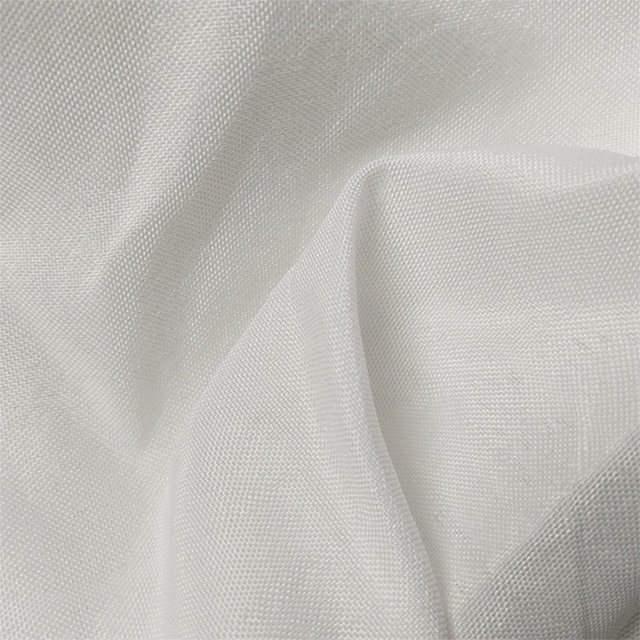
Require detailed Technical Data Sheets (TDS) upfront to verify fabric strength, material type, and weave structure. A vague TDS is an immediate red flag. The document must list exact testing methodologies, such as ASTM D5034 for tensile strength or ISO 13934. Verify the manufacturer's willingness to disclose fiber origin and binder formulations. Transparency regarding raw material sourcing ensures you are not purchasing degraded or recycled polymers disguised as virgin industrial grade. A reputable polyester scrim supplier will openly share their testing parameters and stand behind their published specifications with verifiable lab results. They should also provide Certificates of Analysis (CoA) with every shipment, proving that the specific lot meets the agreed-upon tolerances.
Investigate their inline inspection technologies. Relying solely on manual visual inspection is insufficient for high-speed textile manufacturing. Look for automated optical inspection systems that detect broken yarns, missing threads, or binder pooling in real-time. Demand documentation on lot-to-lot consistency. Consistent quality is mandatory to maintain reliable output across complex production runs. Review their root-cause analysis process for non-conforming materials. If a defect occurs, the facility must have a structured corrective action plan, such as an 8D report, to identify the mechanical or chemical failure and prevent its recurrence. Ask to see their defect logs and how they handle quarantine procedures for out-of-spec rolls.
Assess their capability to engineer custom materials rather than just selling off-the-shelf commodities. Industrial applications rarely fit standard specifications. Evaluate their technical team's ability to collaborate on optimizing the fabric for your specific machinery. This includes adjusting roll widths to match your coating line, modifying core sizes for your unwinding stands, or specifying exact splice types. A butt splice may be required to pass through tight calendar rollers, whereas an overlap splice might cause a machine jam and damage expensive equipment. Ultrasonic splices offer the flattest profile but require specialized equipment. Engineering support ensures the material integrates seamlessly into your existing infrastructure without requiring you to modify your machines.
Analyze their production capacity and redundancy. Can they handle large-scale scrim fabric wholesale orders without extending lead times? A facility running at maximum capacity has no buffer for equipment breakdowns or sudden demand spikes. Investigate their raw material sourcing stability. Ask about their inventory levels for polyester yarn and chemical binders. Geopolitical disruptions or chemical shortages can halt production entirely. A resilient partner maintains safety stock of critical raw materials and operates multiple production lines to guarantee uninterrupted delivery schedules. You should also verify their logistics network and their ability to expedite shipments during emergency shortages.
Factor in the hidden costs of machine downtime, scrap rates due to material defects, and delayed shipments against the initial quote. A cheaper roll of fabric that causes continuous web breaks on your coating line is ultimately more expensive. Calculate the labor costs associated with re-threading machines, cleaning binder residue off calendar rollers, and disposing of ruined composite materials. Evaluate the financial impact of inconsistent yields. A reliable partner providing dimensionally stable materials maximizes your machine uptime and minimizes waste. This comprehensive evaluation framework provides a realistic picture of the true operational expenses associated with the material, proving that upfront unit price is only a fraction of the actual cost.
Automotive and aerospace sectors demand extreme thermal stability, precise resin wet-out, and absolute reliability. Materials used in these fields face rigorous safety and performance standards. When vetting a partner, ask for case studies or data on their material's performance in high-pressure compression molding. For example, automotive air vent systems require reinforcements that will not degrade under rapid temperature fluctuations. The fabric must allow resin to flow evenly through its grid without trapping air bubbles. Trapped air creates voids, which act as stress concentrators and lead to premature part failure. Verify their experience with TS 16949 or AS9100 quality standards, which dictate strict traceability and process control requirements for transportation manufacturing.
Architectural interiors require specific aesthetic and safety performance. A vinyl wallcovering scrim backing must possess a perfectly smooth surface profile. Any knots, slubs, or thick splices will cause "read-through," creating visible bumps on the finished decorative surface. Consistent adhesion is necessary to prevent the vinyl from delaminating from the wall over time. Furthermore, the material must comply with strict fire retardancy standards, such as ASTM E84 Class A ratings. Evaluate the supplier's history with architectural materials and their understanding of aesthetic defect prevention. They must utilize highly filtered binders and strict tension control to maintain a flawless profile that meets the demands of high-end commercial interior designers.
Commercial roofing membranes face brutal environmental conditions. The reinforcement layer must provide high tear strength and puncture resistance to withstand foot traffic, hail, and mechanical fasteners. Long-term durability against environmental degradation is non-negotiable. Review their testing data for accelerated aging, UV resistance, and moisture wicking. If the scrim backing wicks moisture into the center of the membrane, it will cause blistering, delamination, and eventual roof failure. The manufacturer must demonstrate expertise in anti-wicking yarn treatments and heavy-duty weaving techniques designed specifically for TPO, PVC, or EPDM roofing systems. Ask for specific data on their anti-wicking chemical dips and how they test for capillary action in the lab.
Lab samples rarely represent production-scale realities. A hand-cut A4 sample might pass initial tensile tests, but a 10,000-meter roll introduces entirely new variables like tension variation, edge fraying, and splice integrity. Mandate production-intent samples pulled directly from a continuous run. Test for chemical compatibility, adhesion strength, and dimensional stability under actual processing temperatures. Run the sample through your coating ovens at full line speed. This exposes thermal shrinkage issues that static lab ovens miss. Thorough prototyping prevents catastrophic failures during the transition to full-scale manufacturing. You must also test the roll's unwinding characteristics to ensure the material does not telescope or bind on the core.
Machine operators often struggle with a new material's handling characteristics. Different tension requirements can cause wrinkling, tracking issues, or web breaks. Schedule controlled pilot runs before committing to full production. Require the supplier's technical representative to be available, preferably on-site, to assist with calibrating tension and heat settings. Their expertise in how their specific industrial fabrics behave under stress is invaluable. Adjusting nip roller pressure, oven temperatures, and unwind tension during a pilot run ensures your operators are comfortable and capable of maintaining target yields. Document all machine adjustments made during the pilot run to create a standardized operating procedure for the new material.
Define acceptable defect rates, delivery windows, and the financial recourse for rejected lots before signing long-term contracts. Ambiguity in quality expectations leads to disputes. Specify the Acceptable Quality Limit (AQL) for major and minor defects. Detail exactly how many broken yarns, missed binder spots, or splices are permitted per hundred meters. Establish firm delivery windows and outline the penalties for late shipments that cause line stoppages. Clear SLAs protect your operational budget and force scrim suppliers to maintain strict internal quality controls to avoid financial penalties. Ensure the SLA includes a clear protocol for returning out-of-spec rolls and receiving immediate replacements.
Choosing a reliable partner requires prioritizing technical transparency, quality assurance infrastructure, and engineering alignment over the lowest initial quote. The structural integrity of your final product depends entirely on the consistency of the reinforcement layer. Base your final decision on a manufacturer's ability to provide verifiable data, demonstrate lot-to-lot consistency for complex runs, and support a rigorous, phased sampling process. Protect your production lines by vetting their optical inspection systems and supply chain redundancies.
Audit your current material specifications and document exact processing temperatures, line speeds, and required roll dimensions.
Request comprehensive technical data sheets, Certificates of Analysis, and production-intent roll samples from three shortlisted manufacturers.
Schedule a controlled pilot run on your manufacturing line to validate dimensional stability, adhesion performance, and machine runnability.
Draft a strict Service Level Agreement detailing acceptable defect limits, splice requirements, and delivery schedules before issuing the first purchase order.
A: Woven structures rely on interlaced yarns to provide high mechanical strength, maximum reinforcement, and a soft hand, making them ideal for heavy-duty laminated fabrics. Laid structures utilize chemically bonded yarns laid across each other at 90-degree angles, resulting in a lightweight, cost-effective, and dimensionally stable grid suited for flat profiles and standard laminates.
A: Polyester offers an optimal balance of high dimensional stability under heat, superior moisture resistance, and overall cost-effectiveness. Nylon absorbs moisture and stretches, causing delamination during coating. Kevlar is exceptionally strong but often cost-prohibitive and difficult to cut. Polyester remains the preferred choice for most lamination and compression molding applications.
A: Critical metrics include yarn denier, threads per inch or centimeter, tensile strength in both warp and weft directions, elongation at break, binder chemistry type, fabric weight (GSM), and specific thermal shrinkage percentages at defined processing temperatures.
A: Leading manufacturers utilize automated inline optical inspection systems to detect defects in real-time. They enforce strict raw material vetting, maintain standardized tension control during the weaving or laying process, and provide ISO-certified quality assurance documentation and Certificates of Analysis for every shipped roll.
A: Lead times for custom industrial textiles vary based on customization complexity, the duration of prototyping phases, and global supply chain variables. Typically, production and delivery range from 4 to 12 weeks after the final sample approval and contract signing.


