Jumbo Roll Scrim Backing Fabric

- All
- Product Name
- Product Keyword
- Product Model
- Product Summary
- Product Description
- Multi Field Search
Views: 0 Author: Site Editor Publish Time: 2026-06-12 Origin: Site


Balancing high tensile strength against total weight presents a massive engineering challenge. Industrial applications demand highly resilient materials for daily operations. Product designers constantly struggle during the material selection phase. They need lightweight textiles capable of surviving extremely harsh mechanical stress. You require robust fabrics tough enough to resist aggressive tearing. However, they must remain light enough for highly efficient material handling. This exact scenario highlights where pp laminate scrim mesh excels beautifully. It successfully combines an oriented polypropylene structural grid. Industry experts commonly call this structural grid the scrim. Manufacturers then apply strong protective outer layers over the scrim. These outer layers typically include extruded film, metallic foil, or non-woven substrates. Our comprehensive technical evaluation guide actively assists procurement teams and product engineers. You can confidently assess complex material specifications using this clear framework. We will help you mitigate severe delamination risks effectively. You will also learn to finalize strict supplier criteria for reinforced PP textiles. We cover performance limits, core applications, and vital sourcing checklists thoroughly. This knowledge streamlines your entire material selection process immediately.
Structural Advantage: Laminated PP scrim prevents tear propagation while maintaining a lower basis weight than traditional solid woven fabrics.
Material Selection: Ideal for applications requiring high chemical resistance and waterproofing; less suited for continuous high-UV exposure without specific additives.
Cost vs. Performance: Offers a middle-ground cost profile between standard poly sheeting and heavy-duty PVC or fiberglass meshes.
Procurement Priority: The most critical failure point is lamination integrity; supplier vetting must require verifiable peel strength and tear resistance data.
Understanding the fundamental composite structure forms the absolute basis of material selection. The scrim provides highly essential directional strength to the entire composite. It usually features a tight bi-directional or tri-directional grid configuration. This internal grid acts as a remarkably robust structural skeleton. It aggressively stops accidental punctures from expanding across the wide material surface. Next comes the highly protective polypropylene laminate layer. The laminate completely encapsulates the underlying grid structure. It naturally delivers vital barrier properties against intrusive ambient moisture and fine dust. It also provides truly excellent abrasion resistance for incredibly harsh handling environments.
Critical performance metrics precisely define how the composite handles dynamic stress. Tensile and tear strength naturally sit at the very top of this evaluation list. We closely measure this structural strength during standard quality control. We absolutely want to see how effectively the grid stops rapid puncture propagation. Engineers typically track these critical metrics in N/5cm or lbs/inch. Weight and overall material thickness also matter significantly during the early design phase. You must assess the GSM (grams per square meter) quite carefully. You should also closely measure the exact mil thickness against your specific yield requirements. Do not ignore important chemical and thermal resistance ratings. You must evaluate long-term material performance in highly acidic or highly alkaline environments. Always explicitly map out safe operational temperature thresholds before finalizing your technical design.
Performance Metric | Standard Measurement Unit | Primary Engineering Focus |
|---|---|---|
Tensile & Tear Strength | N/5cm or lbs/inch | Stopping puncture propagation and handling sudden load shocks. |
Basis Weight | GSM (Grams per Square Meter) | Optimizing transportation costs and manual handling efficiency. |
Film Thickness | Mils or Microns | Determining overall barrier integrity against moisture and dust. |
Thermal Resistance | Celsius / Fahrenheit | Ensuring stability in extreme climate environments. |
Known limitations logically require a deeply skeptic’s view for highly safe product design. Prolonged direct UV exposure completely damages untreated polypropylene quite rapidly. It specifically requires chemically specialized UV stabilizers for long-term exterior use. Physical stiffness profiles also present distinct daily engineering challenges. Polypropylene generally feels somewhat less pliable than certain flexible polyethylene (PE) alternatives. This noticeable material stiffness becomes highly problematic in extreme cold weather environments. Engineers must proactively account for decreased handling flexibility during winter outdoor installations.
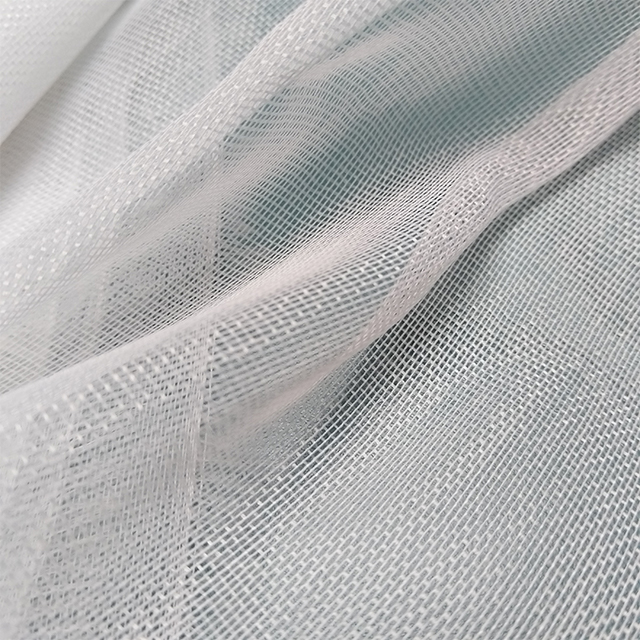
The highly unique mechanical properties of reinforced PP fabric make it incredibly versatile. It handles massively heavy mechanical loads effortlessly. It strongly resists pervasive ambient moisture. It also stops catastrophic progressive tearing highly efficiently.
Massive construction applications rely heavily on this highly engineered composite material. It delivers truly outstanding vapor barrier performance in highly humid regional climates. Professional building installers greatly appreciate its natural resistance to accidental mechanical damage. Dropped heavy construction tools or sharp work boots rarely puncture the reinforced outer surface. It reliably provides very strong weatherproofing during highly active and chaotic construction phases.
Modern global logistics operations demand tough materials capable of surviving extremely rough handling.
Chemical manufacturers consistently use it for highly reusable industrial shipping sacks.
Commercial timber companies strongly prefer it for highly durable outdoor lumber wrap.
Global logistics teams actively deploy it as massive industrial protective cargo covers.
The absolute primary operational advantage clearly lies in its superior tear resistance. A tiny localized puncture simply will not cause catastrophic packaging failure during long transit. The internal geometric structural grid strictly stops the active tear dead in its tracks.
Interior commercial design and flooring manufacturing sectors leverage this specific mesh extensively. It functions beautifully as a highly rigid stabilizing intermediate layer in Luxury Vinyl Tile (LVT). Commercial office carpet backing systems also utilize it extensively to maintain their original shape. It actively ensures absolutely exceptional dimensional stability under heavy daily human foot traffic. It effortlessly handles intense repeated load stress without ever warping or stretching over time.
Comparing PP scrim mesh directly against alternative materials clarifies its precise market position. Engineers must strictly balance total weight, long-term durability, and handler safety carefully.
Pros: Polypropylene definitely feels significantly lighter during manual installation handling. It behaves far less brittly during complex tight-corner installation procedures. It also remains much safer to handle manually on the busy job site. It completely lacks inherently hazardous microscopic glass shards.
Cons: Fiberglass inherently provides vastly superior commercial fire resistance ratings. It consistently maintains much higher dimensional structural stability under extreme environmental heat.
Pros: Polypropylene generally remains fully recyclable as a highly efficient single-polymer waste stream. It strictly contains absolutely no toxic plasticizers or potentially harmful chemical phthalates.
Cons: PVC reliably delivers much heavier daily abrasion resistance. It typically offers significantly better long-term outdoor weathering capabilities in direct sunlight.
Pros: The reinforced composite version clearly provides exponentially higher raw puncture resistance. The embedded structural grid actively prevents destructive "zippering" if the flat surface gets forcefully pierced.
Cons: It definitely carries a noticeably higher initial purchase cost per square foot.
Material Type | Key Advantage | Key Disadvantage |
|---|---|---|
Laminated PP Scrim | Excellent strength-to-weight ratio; highly recyclable. | Vulnerable to prolonged UV exposure without additives. |
Fiberglass Mesh | Exceptional heat and fire resistance. | Brittle handling; skin irritation risks. |
PVC Coated Polyester | Superior outdoor weathering and heavy abrasion resistance. | Environmental concerns; harder to recycle. |
Standard Poly Sheeting | Very low initial procurement cost. | Zippers easily upon initial puncture. |
Best Practice: Always explicitly match the chosen reinforcement material to the expected operational environmental exposure. You will severely degrade product lifespan if you mismatch environmental properties.
Procuring highly reliable industrial plastic mesh logically requires a remarkably strict vendor vetting process. Subtle quality variations between competing global suppliers can easily cause catastrophic end-product failures.
You absolutely must deeply evaluate the specific layer bonding process used by the manufacturer. Thermal heat lamination generally performs quite differently than basic chemical adhesive lamination. You should routinely request highly comprehensive batch testing data for actual peel strength. This crucial physical data proves the bonded layers will not separate under intense mechanical stress. Delamination clearly remains the most common critical failure point in composite industrial fabrics.
You should actively assess overall supplier flexibility regarding physical roll dimensions and specific grid designs.
Check the maximum available roll widths carefully for large-scale continuous industrial applications.
Verify exact available roll lengths to actively optimize your internal production line changes.
Discuss specialized custom scrim patterns, such as 2x2 versus 4x4 internal yarns per inch.
Extensive manufacturing customization ensures the delivered material perfectly matches your exact structural engineering requirements.
International industrial sourcing inevitably introduces highly complex logistical transport hurdles. You must actively navigate incredibly difficult international customs processes and wildly fluctuating import tariffs. U.S. HTSUS official classifications for imported composite plastics naturally demand incredibly careful attention. Always explicitly confirm realistic manufacturing lead times and required minimum order quantities (MOQs). Ask potential international suppliers about upfront setup tooling costs for customized extrusion runs.
Successful physical product implementation highly demands highly rigorous prototyping and strict equipment compatibility checks. You simply cannot rush the rapid factory transition to a totally new composite fabric.
You must actively conduct extremely thorough in-house mechanical destructive testing. Do this crucial step before ever committing to a massive factory bulk order. Heavy physical drop tests simulate harsh real-world handling impacts highly effectively. Sharp object puncture tests explicitly reveal exactly how the internal grid responds to penetrating forces. These truly crucial preliminary laboratory steps actively prevent massively expensive financial mistakes during full-scale daily production.
You deeply need to actively evaluate the heat sealing and thermal welding compatibility of the mesh. It absolutely must flow extremely smoothly through your existing high-speed standard production lines. Polypropylene generally responds exceptionally well to modern ultrasonic or direct thermal welding techniques. You must thoroughly check chemical adhesive compatibility highly carefully. You might actively plan to securely bond the mesh to completely secondary structural substrates. Severe chemical incompatibilities can easily ruin the delicate surface bond completely. This rapidly causes immediate and highly catastrophic material delamination.
Common Mistake: Bypassing initial factory equipment calibration usually causes severe high-speed machine jamming. You absolutely must recalibrate all tension settings for new reinforced composite fabrics.
Polypropylene reinforced mesh proudly serves as a highly specialized, remarkably high-yield industrial material. It effectively bridges the glaring functional gap between lightweight plastic films and heavy industrial textiles. It successfully delivers truly exceptional structural tear resistance. It actively achieves this impressive feat without adding any unnecessary excess weight to your final engineered product. We strongly advise corporate procurement buyers to strictly prioritize actual lamination quality over raw base price. Exact tested GSM specifications and internal grid density should completely dictate your supplier shortlisting process. Cheap, completely unverified lamination inevitably leads to disastrous public field failures and massively costly customer returns. You should aggressively reach out to highly prospective global suppliers today. Promptly request their officially verified technical data sheets (TDS) and material safety data sheets (MSDS). Strongly ask for physical evaluation material samples strictly tailored to your specific industrial use case. Testing these raw physical samples directly remains the absolute best way to definitively verify their bold performance claims. Set up your testing matrix early to ensure total success.
A: Laid scrims are chemically bonded exactly at their yarn intersections. They create a much flatter, significantly thinner physical profile. Woven scrims are mechanically interlaced during production. They naturally provide higher physical bulk and offer completely different mechanical stress distribution across the surface.
A: Yes. Polypropylene behaves purely as a highly responsive thermoplastic. You can ultrasonically or thermally weld it extremely easily. This specific property proves completely ideal for actively creating watertight secure seams in complex industrial applications.
A: Generally, yes. It qualifies fully if both the outer laminate and the inner scrim contain 100% pure polypropylene. It qualifies directly for standard single-stream plastic recycling programs. It avoids the massive recycling complications of mixed-material composites like foil-backed fiberglass.
A: The internal scrim strictly dictates the actual tear strength far more than the mil thickness of the outer laminate film. A notably thinner film encapsulating a dense, high-denier structural scrim will vastly outperform a thick film containing a structurally weak scrim.


