Jumbo Roll Scrim Backing Fabric

- All
- Product Name
- Product Keyword
- Product Model
- Product Summary
- Product Description
- Multi Field Search
Views: 0 Author: Site Editor Publish Time: 2026-06-13 Origin: Site


Commercial wallcoverings frequently fail in predictable, frustrating ways. Delamination, shrinking seams, and tearing under structural stress ruin interior designs. These failures stem from immense tension placed on the material surface. We face a constant battle against physical wear and environmental changes. The solution lies entirely beneath the decorative surface. You must use polyester wallcovering scrim. It operates as the engineered backing layer. It stabilizes vinyl and fabric face materials in demanding, high-traffic environments. Selecting the right backing remains a crucial engineering decision. This choice dictates installation success, longevity, and code compliance in commercial spaces. In this guide, you will learn the true anatomy of commercial wall systems. We will explore key testing metrics and installation realities. You will also discover how to evaluate suppliers. This ensures you secure reliable materials for your next major project.
Polyester scrim provides superior dimensional stability and moisture resistance compared to traditional paper or cotton-based backings.
Acting as a structural wall covering mesh, it prevents seam separation and limits shrinkage during temperature and humidity fluctuations.
Evaluating a supplier requires verifying tensile strength data, adhesive compatibility, and manufacturing consistency across high-volume roll batches.
Proper specification reduces long-term maintenance costs and mitigates installation risks like adhesive bleed-through or bubbling.
Commercial wall systems demand highly durable layers. Premium wallpaper reinforcement serves as the hidden backbone for these installations. We must understand its mechanical function.
We can break down commercial wallcoverings into three main structural layers. You have the decorative vinyl or textile face. Below it sits the adhesive or liquid coating. Finally, the woven backing anchors everything together. The backing dictates the absolute physical limits of your final product. Installers rely on this layer to hold the structure rigid. If the backing fails, the entire aesthetic surface collapses. A weak base ruins even the most expensive decorative vinyl.
Inadequate backing creates severe risks in high-traffic commercial spaces. Healthcare facilities endure heavy daily use from medical carts. Busy hotels see constant luggage strikes against corridor walls. Weak wallcoverings suffer deep impact damage easily. Furthermore, moisture retention causes catastrophic mold growth behind the vinyl surface. These environments demand materials capable of absorbing constant physical stress. You cannot risk structural failure in critical commercial zones.
Polyester changes the game entirely. Manufacturers extrude polyester fibers to create a lightweight, high-tensile matrix. This woven matrix distributes physical stress evenly across the wall surface. It absorbs direct impacts easily. It prevents localized tension from tearing the delicate vinyl face. The synthetic fibers stretch slightly under pressure but snap back into place. This dynamic resistance protects the wall integrity.
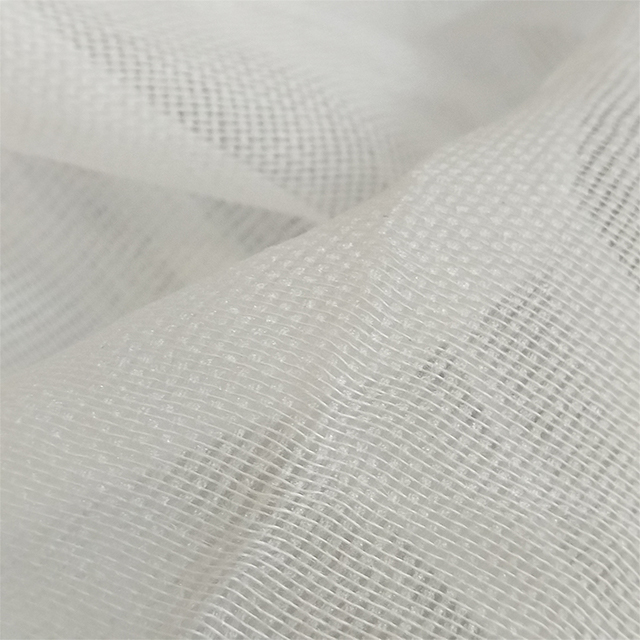
Designers must choose their backing materials carefully. A high-quality wall scrim fabric outperforms legacy options consistently. We compare it against older technologies below.
Cotton-based Osnaburg and Drill fabrics offer decent baseline strength. However, they lack a good strength-to-weight ratio. They feel heavy and cumbersome during installation. Furthermore, cotton requires aggressive chemical treatments to prevent rot. Polyester resists mildew and rot inherently. It remains incredibly lightweight while delivering superior tensile strength. You get better performance without the added bulk.
Paper and non-woven backings tear easily under structural tension. You cannot use them for heavy-duty commercial applications. Polyester scrim provides unmatched tear resistance. We position it as the necessary choice for Type II and Type III commercial vinyl applications. It handles the immense weight of heavy vinyl effortlessly. It refuses to rip during tight corner installations.
Polyester maintains its exact shape under extreme tension. Heavy vinyl layers and wet adhesives pull heavily on the backing material. Polyester resists this aggressive pull effectively. It completely prevents the dreaded "seam gap" effect as wet materials dry and shrink. We outline the performance differences in the comparison chart below.
Dimensional Stability Comparison Chart | ||||
Backing Material | Tensile Strength | Moisture Resistance | Dimensional Stability | Ideal Application |
|---|---|---|---|---|
Polyester Scrim | Very High | Excellent (Non-porous) | Superior | Type II & III Commercial |
Cotton Osnaburg | Moderate | Poor (Requires chemicals) | Moderate | Type I & Light Type II |
Non-Woven Paper | Low | Low to Moderate | Poor | Residential & Low Traffic |
You must verify technical specs before buying any interior decoration material. Relying on guesswork causes project failures.
Commercial-grade reinforcement requires specific baseline testing. ASTM metrics dictate these crucial minimums. Laboratories measure this using grab tensile tests and Elmendorf tear tests. Your backing must survive severe pulling forces without snapping. High tensile strength ensures the wallcovering survives natural building settling. It prevents sudden ruptures across the wall surface.
The geometry of the mesh matters greatly. We measure this in Ends Per Inch (EPI) and Picks Per Inch (PPI). High EPI/PPI increases the total bonding surface area. However, it can reduce flexibility. You must balance thread count for optimal adhesive penetration. A balanced weave allows the paste to grip both the wall and the vinyl securely.
Safety codes remain strictly enforced in commercial buildings. The scrim must not negatively impact overall fire retardancy. The entire composite wallcovering system must pass Class A ASTM E84 testing. Polyester blends well into fire-rated systems. It melts predictably rather than acting as an accelerant.
Mold destroys commercial interiors quickly. Polyester features a purely synthetic nature. It creates an inherently hostile environment for mold proliferation. It does not hold water inside its fibers. It starves fungal spores completely. You protect indoor air quality by specifying synthetic reinforcement.
Materials perform differently in the field than they do in the lab. A proper wall covering mesh adapts to harsh installation realities.
An open weave allows optimal mechanical bonding. Heavy-duty clay adhesives rely on physical grip. Clear strippable adhesives need a porous layer to bite into. The open weave provides hundreds of microscopic anchor points per square inch. They lock the vinyl face directly to the wall. This mechanical grip permanently prevents delamination.
You must prepare the wall surface correctly beforehand. The substrate needs proper priming and smoothing. You must achieve at least a Level 4 drywall finish. Rough walls damage the scrim during installation. A properly sealed wall ensures the backing performs exactly as tested. You cannot rely on the backing to hide deep wall gouges.
Contractors face many unpredictable challenges on site. They often over-work delicate seams or apply paste incorrectly. A high-quality scrim minimizes the resulting damage significantly. It forgives rough handling during complex installations.
Installers easily avoid tearing the material during intricate corner readjustments.
The engineered open mesh prevents trapped air bubbles from forming.
Synthetic fibers effectively stop wet paste bleed-through on fabric faces.
Installers can confidently use paste-the-wall techniques without structural loss.
Your supply chain determines your project success. You must vet manufacturers rigorously before committing to a supplier.
Rigorous quality control remains critical. Manufacturers must maintain exact weave tension and coating weights. Variations in weave tension cause the vinyl to warp on the wall. Inconsistent coating weights lead to unpredictable adhesive absorption. Large-scale rollouts demand perfect consistency. Inconsistent rolls ruin visual alignment.
You need a flexible manufacturing partner. They must adjust scrim weight and width upon request. These adjustments match specific vinyl or textile face weights perfectly. Type III vinyl needs a heavier mesh than Type I. Customization prevents product failures in the field.
Always verify supplier claims thoroughly. Check for active ISO quality certifications. Request independent lab testing for off-gassing and tear strength. Legitimate manufacturers proudly share their compliance documents. You protect your clients by demanding transparent testing data.
Follow these precise steps before placing bulk manufacturing orders:
Request full-width sample rolls to evaluate physical weave quality.
Demand updated technical data sheets (TDS) proving strength metrics.
Conduct localized peel-adhesion tests using your chosen commercial adhesives.
Verify fire certification documents match your local building codes.
We must view polyester wallcovering scrim correctly. It is never a simple commodity add-on. It serves as the vital structural foundation of durable commercial wall design. You build reliable interiors upon this strong base. Investing in premium reinforcement directly reduces installation delays. It limits subsequent maintenance claims over the product lifecycle. You achieve much better installations overall. You satisfy your commercial clients completely. High-quality backing ensures your walls stand the test of time.
A: The primary difference lies in structural integrity. Polyester scrim utilizes interwoven synthetic threads. This woven matrix provides massive tensile strength. It handles heavy commercial vinyl easily. Non-woven backing uses pressed fibers. It offers better breathability but lacks high tear resistance. You use non-woven materials for lighter residential wallpapers. You must use polyester scrim for heavy-duty commercial applications.
A: Yes, it excels in high-humidity areas. Polyester features a completely synthetic, non-porous nature. It naturally resists water absorption. It will not rot or degrade like cotton. When paired with correct mold-inhibiting adhesives, it performs perfectly in bathrooms and humid climates. Fungal spores cannot feed on synthetic polyester strands.
A: Scrim backing provides immense structural forgiveness. It allows installers to aggressively manipulate the material around tight corners. You can use both paste-the-wall and paste-the-paper techniques effectively. The open weave lets adhesives grip tightly. It prevents stretching during wet installations. Installers experience fewer ripped seams and faster overall application times.
A: Yes, but you must match the scrim density to the face weight. Type I light vinyl requires a lighter, more flexible mesh. Type II and Type III heavy vinyl demand a dense, high-tensile backing. Manufacturers adjust the Ends Per Inch (EPI) to match the vinyl load. Proper matching ensures zero delamination.


