Jumbo Roll Scrim Backing Fabric

- All
- Product Name
- Product Keyword
- Product Model
- Product Summary
- Product Description
- Multi Field Search
Views: 0 Author: Site Editor Publish Time: 2026-06-17 Origin: Site


Composite engineers, procurement managers, and structural designers constantly face high-stakes optimization challenges. You must evaluate and select materials capable of handling precise load-bearing applications without complicating production. Selecting the wrong reinforcement mesh severely limits the entire matrix assembly. A poor material match directly causes interlaminar delamination, excessive part weight, or even premature structural failure under stress. This article provides a rigorous, supplier-agnostic framework to help you choose the right materials confidently. We will explore how to evaluate industrial textiles based on critical resin compatibility, baseline mechanical performance, and practical manufacturing realities.
Material-to-Matrix Matching: The success of any structural mesh material depends heavily on its sizing and chemical compatibility with the chosen resin system (epoxy, polyester, or vinyl ester).
Performance vs. Producibility: High-tensile weaves offer superior strength but introduce complexities in wet-out and drapeability during manufacturing.
Evaluation Mandates: Sourcing decisions must prioritize batch-to-batch consistency and documented compliance with ASTM/ISO standards over baseline material cost.
Risk Mitigation: Proper handling, storage, and QA protocols are required to prevent contamination that degrades interlaminar shear strength.
Engineers constantly battle the trade-off between strength-to-weight ratios and overall manufacturability. A reinforcement grid must absorb stress effectively. However, it cannot add unnecessary mass to the final part. It also must not create dry spots during the infusion process. Highly dense weaves deliver incredible strength but often restrict resin flow. Conversely, overly open meshes allow rapid wet-out but may fail under targeted mechanical loads. The ultimate goal is specifying a structural mesh material capable of bearing intended stresses while remaining porous enough for rapid, uniform resin saturation.
Chemical finishes, commonly known as sizing, dictate the final bond strength between the fiber and the matrix. Manufacturers apply these microscopic chemical coatings to raw fibers during production. Sizing acts as a vital chemical bridge. It protects the fragile fibers during weaving and ensures they bond chemically to the resin.
Utilizing unmatched binders introduces severe structural risks. For example, using a fabric sized for polyester resin inside an epoxy matrix often leads to catastrophic interlaminar failure. The chemical mismatch prevents the resin from cross-linking with the fiber surface. Always verify chemical compatibility before initiating large-scale production runs.
Best Practice: Request a detailed Technical Data Sheet (TDS) specifically listing compatible resin systems for every textile batch.
Understanding stress distribution is crucial for optimizing composite performance. Open-mesh structures handle isotropic and anisotropic stress very differently compared to solid woven fabrics or chopped strand mats. Chopped strand mats distribute loads isotropically, meaning they handle stress equally in all directions. However, they provide lower overall tensile strength. Solid woven fabrics deliver high strength but limit interlaminar resin bonding.
An open-grid structure allows the resin matrix to form a continuous phase through the material. This continuous phase effectively locks the layers together. It prevents shear loads from ripping the laminate apart. Engineers often deploy these materials to manage highly directional (anisotropic) stress paths without adding bulky solid layers.
Fiberglass remains the industry standard for most general composite applications. E-glass dominates the market due to its excellent balance of performance and affordability. S-glass provides a stiffer, stronger alternative for more demanding environments.
Best for: Cost-effective structural reinforcement, marine environments requiring corrosion resistance, and high-volume commercial manufacturing.
Limitations: Fiberglass exhibits a significantly lower modulus compared to advanced composites. It also carries a heavier weight penalty, making it less ideal for aerospace applications.
Carbon fiber dominates when weight reduction is the primary design mandate. It offers exceptional stiffness and handles extreme tensile loads effortlessly.
Best for: High-stiffness, low-weight aerospace structures, high-performance automotive chassis components, and premium sporting goods.
Limitations: Carbon fiber comes at a high financial premium. It also presents serious galvanic corrosion risks if you pair it directly with aluminum components. Furthermore, carbon fibers remain relatively brittle under sharp impact compared to aramid.
Aramid fibers excel in environments requiring extreme durability and energy absorption. Basalt offers a sustainable, heat-resistant alternative derived from volcanic rock.
Best for: High impact resistance, extreme abrasion resistance, and excellent thermal stability in high-heat environments.
Limitations: Aramid readily absorbs environmental moisture and requires special shears to cut accurately. Basalt faces limited supplier availability, making global sourcing difficult.
Material Type | Tensile Modulus | Impact Resistance | Moisture Sensitivity |
|---|---|---|---|
E-Glass | Low to Moderate | Moderate | Low |
Carbon Fiber | Very High | Low (Brittle) | Low |
Aramid | High | Very High | High |
Basalt | Moderate to High | Moderate | Low |
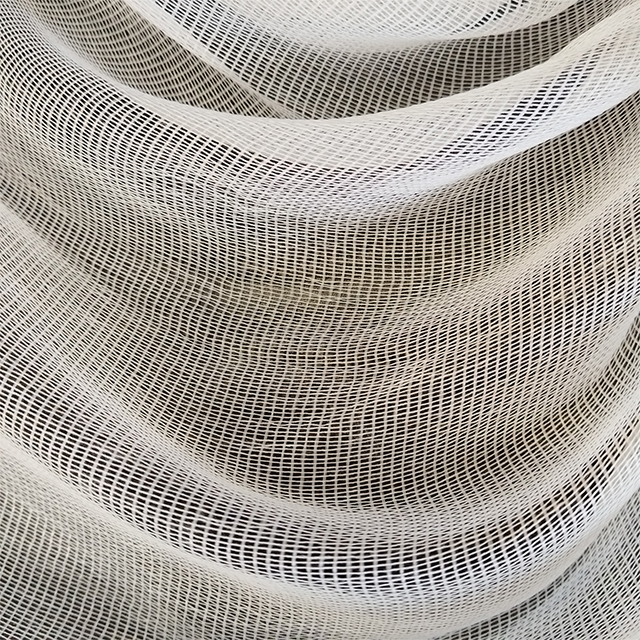
Areal weight directly dictates how fast you can build part thickness. Suppliers measure this in Grams per Square Meter (GSM) or ounces per square yard. You must calculate the required weight based on your targeted ply count. Heavier fabrics build structural thickness rapidly. However, they require more resin and generate higher exothermic heat during curing. Lighter fabrics require more layers but offer superior control over complex contours.
The geometric layout of the yarns fundamentally alters the material behavior. You must evaluate stability versus drapeability when selecting a composite fabric.
Plain Weave: Yarns interlace in a simple one-over, one-under pattern. It provides excellent weave stability but drapes poorly over complex curves.
Twill Weave: Yarns cross over multiple intersecting yarns. It drapes beautifully over complex molds but unravels easily during handling.
Leno Weave: Two warp yarns twist around the weft yarns. This locks the grid firmly in place. It prevents fiber shifting during aggressive resin infusion processes.
Porosity, or the "openness" of the mesh, directly dictates resin flow rates. An open grid allows low-viscosity resins to race across the mold under vacuum. A dense weave restricts flow, potentially leaving dry spots in the center of your laminate.
Supplier Technical Data Sheets (TDS) often present idealized laboratory metrics. You must read these documents critically. Laboratory tests usually pull dry, perfectly aligned fibers. Real-world applications involve resin-saturated, contoured plies. Always look for testing data based on actual cured laminates rather than dry fiber metrics alone. Ensure the testing methodology aligns with your specific use case.
Material traceability is non-negotiable for critical structural applications. You must highlight the necessity of requesting relevant compliance standards. Look for ISO 9001 certifications for general industrial applications. If you operate in aerospace, demand strict AS9100 compliance. Proper certification ensures the manufacturer controls sizing chemistry, fiber tension, and weaving environments consistently across every roll.
Theoretical material strength means nothing if your shop floor cannot process it effectively. Bridging remains a significant risk in complex molds. Bridging occurs when a stiff reinforcement mesh fails to conform tightly into sharp corners. Instead of following the mold surface, the fabric spans the gap. This leaves a resin-rich void underneath. These voids become instant stress concentrators, leading to structural cracking under load. You must carefully balance fabric stiffness with drapeability to prevent bridging.
Mesh porosity interacts aggressively with resin viscosity. High-viscosity resins struggle to penetrate tightly woven fibers. If the mesh is too dense for your specific vacuum infusion process, you face severe risks. These include microscopic voids, trapped air bubbles, and dry fibers. Dry fibers act as failure initiation points. Conversely, if your mesh is too open, you may experience resin pooling. Pooling generates localized exotherm spikes, which cause micro-cracking during the cooling phase.
Common Mistake: Attempting to infuse a heavy-weight, dense fabric using a high-viscosity room-temperature epoxy without applying sufficient vacuum pressure.
Environmental controls play a massive role in composite quality. Humidity and temperature fluctuations quietly degrade materials before layup even begins. Many sizing agents are hygroscopic. They pull moisture straight out of the shop air. If moisture absorbs into the fiber bundle, it turns into steam during the exothermic curing phase. This steam violently pushes the resin away from the fiber, ruining the interlaminar bond. Always store your materials in climate-controlled environments and seal partially used rolls in plastic tubing.
Finding a reliable industrial textile supplier requires looking beyond the price per yard. You need a framework for evaluating their actual production capacity and operational flexibility. Can they scale up production rapidly if your product takes off? Do they offer customization abilities? Sometimes you need custom widths to minimize trim waste. Other times, you require specialized selvage edges to prevent fraying during automated cutting. A strong supplier accommodates these requests without excessive lead time extensions.
Never commit to bulk procurement based solely on a PDF data sheet. You must test the materials in your own facility using your exact processes.
Run Wet-Out Trials: Infuse a test panel using your specific resin, vacuum pressure, and ambient shop temperature. Track how fast the resin flows across the grid.
Conduct Localized Peel Tests: Cure the panel and deliberately attempt to pry the layers apart. This verifies that the sizing chemistry genuinely matches your matrix.
Evaluate Handling: Have your technicians cut and drape the material over your most complex mold tool. Ask them to report on fraying, bridging, and general workability.
You must know what to look for in a supplier's QA process. Ask them specific questions about their batch testing. How do they verify weave stability over a 500-yard roll? Do they utilize automated optical inspection to flag broken filaments? Request their standard defect rates per roll. High-quality manufacturers document and flag minor defects, allowing your cutting department to work around them efficiently.
Selecting the right materials requires a highly strategic evaluation process. You must align the base fiber type directly with your mechanical load requirements. Always verify that the chemical sizing matches your chosen resin system to ensure maximum bond strength. Finally, validate manufacturability through physical wet-out and drape testing on your own shop floor. A high-performance reinforcement mesh fabric only succeeds when it integrates seamlessly into your production environment.
For your next steps, immediately request updated TDS documentation and safety data sheets (SDS) from your current suppliers. Order physical samples of competing weaves and run in-house matrix trials before signing your next bulk procurement contract.
A: A woven composite fabric typically features tightly interlaced yarns, creating a nearly solid sheet. This provides high tensile strength but limits resin penetration. A reinforcement mesh utilizes an open grid architecture. This open structure allows for higher resin flow rates, superior interlaminar bonding, and better matrix continuity.
A: You must correlate the mesh size directly with your resin viscosity and desired flow rate. Thicker, high-viscosity resins require wider mesh openings to prevent dry spots. Thinner resins can penetrate tighter grids. Always balance the required flow dynamics with the final mechanical specifications of your laminate.
A: The base structural material, such as fiberglass, handles both resins fine. However, the specific chemical sizing applied during manufacturing dictates compatibility. A mesh sized for polyester will not bond properly with an epoxy matrix. You must specify the intended resin system when ordering to ensure proper chemical adhesion.
A: Delamination primary stems from incompatible sizing chemistries. Other major culprits include insufficient wet-out caused by high resin viscosity, bridging inside mold corners, and moisture contamination prior to layup. Improper curing temperatures can also prevent the matrix from cross-linking fully with the textile.


