Jumbo Roll Scrim Backing Fabric

- All
- Product Name
- Product Keyword
- Product Model
- Product Summary
- Product Description
- Multi Field Search
Views: 0 Author: Site Editor Publish Time: 2026-06-18 Origin: Site


Sourcing industrial materials overseas presents a distinct challenge. You must balance aggressive unit economics against strict quality consistency across large production runs. A single bad batch of fabric can halt assembly lines, trigger recalls, and destroy profit margins. This guide focuses strictly on woven mesh. We cover its critical role in industrial, commercial, and technical applications. Common use cases include precision filtration, automotive components, specialized apparel, and structural reinforcement.
Our objective is straightforward. We will provide a transparent, evidence-based framework for evaluating sourcing partners. You will learn how to integrate a reliable wholesale woven mesh supplier into your supply chain seamlessly. Following these actionable steps helps you avoid the dreaded "quality fade" often seen in overseas procurement. Hard data and rigorous verification will replace guesswork in your purchasing process.
Partnering directly with an industrial textile manufacturer rather than a trading company ensures tighter control over spec tolerances and OEM customization.
Evaluating a wholesale woven mesh supplier requires hard data on GSM variance, tensile strength limits, and dye-lot consistency, not just per-yard pricing.
Verified compliance (e.g., OEKO-TEX, ISO 9001) and standardized third-party quality control (QC) are non-negotiable for mitigating cross-border sourcing risks.
Establishing clear MOQ (Minimum Order Quantity) tiers and lead-time schedules upfront prevents production bottlenecks in bulk fabric wholesale procurement.
Buyers often confuse factory-direct partners with trading companies. Trading hubs like Guangzhou or Keqiao house thousands of middlemen. These intermediaries buy surplus stock and rebrand it for export. They rarely own the weaving looms. You must distinguish between these brokers and a true industrial textile manufacturer. Real manufacturers control the production floor. They dictate yarn tension, loom speeds, and dyeing schedules directly.
Trading companies offer wider catalogs. They bundle different materials easily for smaller buyers. However, direct manufacturers provide crucial supply chain transparency. They hold direct accountability for defect rates. You also secure scalable pricing for bulk fabric wholesale. Cutting out the middleman ensures your technical specifications remain intact. When an issue arises, you speak directly to the engineers solving the problem.
Vetting requires hard metrics. Request specific data before ordering any samples. Ask for the following capacity indicators during your initial outreach:
Active Weaving Looms: The number and type (e.g., water-jet, air-jet, or rapier looms).
Monthly Yardage Capacity: Total production volume to gauge if they can handle your peak season spikes.
Dyeing Facilities: Clarify if they use in-house or outsourced dyeing centers. In-house dyeing drastically reduces color matching errors.
Storage Space: Adequate warehousing prevents raw yarn degradation before weaving begins.
Core polymers dictate final performance. You must match the polymer to your required outcomes. Polyester resists UV degradation and holds its shape exceptionally well. Nylon provides superior abrasion resistance and inherent elasticity. Specialized blends offer chemical inertness for harsh environments. A high-quality supplier will recommend the optimal yarn denier for your specific application.
Variance destroys consistency. Define acceptable parameters early in the negotiation. Track GSM (Grams per Square Meter) strictly. Monitor aperture size for filtration accuracy. Specify roll width clearly in your contract. Standard rolls often run 58/60 inches wide. Some industrial applications require custom wide-width formats exceeding 100 inches. Establish clear tolerances (e.g., ±3% GSM variance) to reject non-compliant batches automatically.
Demand rigorous testing documentation. Physical testing proves material durability under stress. You need verifiable data on tear strength and burst strength. Dimensional stability is equally vital. The mesh must not shrink or warp after washing or industrial processing. Request lab reports detailing elongation under load limits.
Polymer Type | Primary Advantage | Common Industrial Application | Cost Profile |
|---|---|---|---|
Polyester | High UV resistance, low shrinkage | Outdoor gear, safety netting, lamination bases | Low to Medium |
Nylon | High abrasion resistance, elasticity | Automotive seating, heavy-duty filtration | Medium to High |
Polypropylene | Chemical inertness, lightweight | Corrosive fluid filtration, medical barriers | Medium |
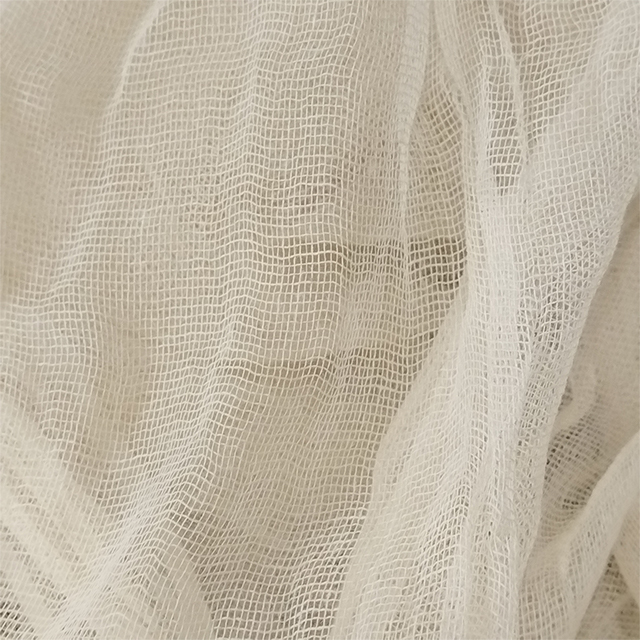
Developing OEM woven mesh follows a strict Standard Operating Procedure. You start with lab dips for precise color matching. The factory provides options A, B, and C under standardized light boxes. Once you approve a lab dip, the factory produces pre-production samples (PPS). You must approve the PPS before bulk weaving begins. Never skip this physical validation step.
Value-add treatments change fabric behavior entirely. Flame retardancy protects industrial safety gear. Anti-microbial finishes suit medical or sports equipment applications. Durable Water Repellent (DWR) coatings keep materials dry. Assess how these treatments impact material hand-feel. Chemical coatings can sometimes compromise long-term tear strength if applied incorrectly. Always test a finished swatch.
Non-standard weaves require custom tooling. Specialized selvedge finishes demand unique loom setups. Understand the associated cost and time assumptions immediately. Loom modification adds several weeks to your initial timeline. Factor these operational delays into your product launch schedule. Clear communication here prevents missed deadlines.
Establish an acceptable point system early. The 4-Point System serves as the global standard for fabric defects. It assigns penalties based on defect size and severity. For example, a defect under 3 inches scores one point. A defect over 9 inches scores four points. Agree on the maximum allowable points per 100 linear yards. Do this before signing any purchase order to secure your leverage.
Never take safety claims at face value. Verify all regulatory certifications independently. Check the validity of OEKO-TEX Standard 100 certificates via their online portal. Ensure REACH compliance for European consumer markets. Request recent ISO 9001 factory audit reports. Look for expired dates or mismatched company names on the paperwork. Fraudulent certificates remain a persistent issue in overseas procurement.
Independent inspection mitigates financial risk heavily. Integrate services like SGS or Intertek. Schedule these audits at the pre-shipment phase. Inspectors will ensure spec adherence on the factory floor. They catch visual defects and test structural limits before container loading. Paying for a third-party audit is much cheaper than receiving an unusable container.
Bulk production takes considerable time. Break down the production timeline carefully to manage inventory. Custom orders typically require 20 to 35 days from start to finish. Here is a standard breakdown:
Raw Yarn Procurement: 3 to 5 days.
Warping and Sizing: 4 to 7 days.
Active Weaving: 10 to 14 days depending on loom availability.
Dyeing and Finishing: 5 to 7 days.
Final QC and Packing: 2 to 3 days.
Choose your shipping terms wisely. FOB (Free on Board) gives you complete control over ocean freight costs. CIF (Cost, Insurance, and Freight) leaves logistics entirely to the supplier. Most bulk exports depart from major Chinese textile ports. Shanghai, Ningbo, and Shenzhen handle massive daily volumes. Consolidating your freight near these hubs reduces inland trucking costs.
Ocean freight poses severe moisture risks. Specify export-grade packaging directly in your contract. Require thick inner polybags to block humidity. Mandate outer woven bags for abrasion protection during transit. Use hard paper tubes for the inner roll to prevent crushing. Damaged edges ruin yardage yields and waste expensive fabric.
Structure your Request for Quotation (RFQ) aggressively. This immediately filters out weak intermediaries. Demand exact technical data sheets (TDS) alongside price quotes. True manufacturers can supply a TDS instantly. Middlemen usually stall or provide vague, copied documents. This initial friction is how you identify a capable china mesh supplier.
Watch out for obvious warning signs during communication. Unusually low MOQs for custom weaves indicate a lack of dedicated loom space. Refusals to accept third-party inspections signal hidden quality issues. Vague answers regarding production facility locations usually mean they outsource everything. Avoid partners who dodge technical questions regarding yarn denier or dye fastness.
Never rush into a multi-container contract. Scale up systematically to protect your cash flow. Start with a minimum viable bulk order. Testing 1,000 to 3,000 yards proves their actual capability. Treat this pilot run as a stress test for their communication and logistics. Once they deliver successfully, you can negotiate a reliable annual contract.
Selecting a wholesale mesh supplier acts as a core infrastructure decision. It represents much more than a simple purchasing transaction. Your final landed cost remains the only accurate procurement metric. This calculation includes defect rates, wasted yardage, and delayed shipments. Prioritize manufacturers who offer total transparency and hard testing data. Request technical data sheets today to compare baselines. Ask for physical swatch books to verify hand-feel and weave density. Initiate a custom OEM consultation now to begin your validation process confidently.
A: Standard MOQs depend heavily on raw material minimums and dye vat capacities. Most reputable manufacturers require between 1,000 and 3,000 meters per color. Custom yarn blends or unique widths often push the MOQ closer to 5,000 meters to justify loom setup costs.
A: Factories use commercial color matching software and specialized spectrophotometers. They measure the delta E (ΔE) tolerance between batches. Approving physical lab dips ensures a visual baseline. Modern facilities control dye vat temperatures strictly to minimize lot-to-lot color variance.
A: Yes. Manufacturers achieve this through either inherent FR yarns or applied chemical FR coatings. Inherent yarns cost more but offer permanent protection. Chemical coatings are cheaper but may degrade over time. Always request valid certification paperwork to confirm safety standards.
A: The global industry standard is a 30% T/T (Telegraphic Transfer) deposit to begin production. The remaining 70% is due before shipment, usually upon passing a third-party QC inspection. For massive, multi-container contracts, a Letter of Credit (L/C) becomes a viable negotiation option.


