Jumbo Roll Scrim Backing Fabric

- All
- Product Name
- Product Keyword
- Product Model
- Product Summary
- Product Description
- Multi Field Search
Views: 0 Author: Site Editor Publish Time: 2026-06-15 Origin: Site


For tape manufacturers and converters, producing a reliable product demands extreme precision. The structural integrity of duct tape relies entirely on its skeleton. This critical inner core is the backing fabric. Historically, the industry relied heavily on natural fibers to build this core. Now, shifting from traditional cotton to engineered polyester scrim has standardized performance globally. This transition brings massive operational benefits.
However, it also introduces new variables in adhesive compatibility and tensile strength. Tape producers must navigate these complex factors carefully to avoid costly production errors. You cannot simply swap one material for another without recalibrating your entire coating line. This guide breaks down the technical specifications, coating risks, and sourcing criteria required for modern manufacturing. We will explore how to thoroughly evaluate and select the right polyester scrim for industrial and utility tape production. You will gain actionable insights to improve final product reliability, optimize your supply chain, and streamline daily manufacturing operations.
Material Shift: Polyester scrim offers superior moisture resistance and dimensional stability compared to legacy cotton blends at a lower cost per square meter.
Performance Metrics: The critical evaluation factors for duct tape backing fabric are mesh count (warp and weft), tensile strength, and elongation limits.
Manufacturing Risk: Poorly specified base cloth leads to adhesive bleed-through, delamination from the PE film, or inconsistent hand-tearability.
Sourcing Logic: Procurement decisions must balance the end-use grade (utility vs. HVAC/industrial) with supplier capabilities (custom slitting, consistent GSM, lead times).
Tape converters face a constant, highly technical business challenge. They need a carrier balancing machine-direction strength and cross-direction tearability. Achieving this delicate balance without driving up raw material costs is notoriously difficult. Natural fibers used to dominate this manufacturing space. However, traditional cotton blends present severe limitations for modern high-speed production. They fluctuate wildly in price based on agricultural yields. Furthermore, cotton absorbs moisture easily, which degrades long-term tape performance.
Objective comparisons clearly show why the industry shifted to polyester. Polyester delivers exceptional moisture resistance natively. It provides synthetic uniformity across massive, multi-ton production runs. You rarely encounter the weak spots inherent to natural spun yarns. Furthermore, pricing remains highly predictable compared to agricultural commodities. This stability allows converters to forecast annual production budgets accurately.
We must understand how this material functions within the final product. The scrim for tape acts as the crucial middle layer. It binds the outer polyethylene (PE) waterproof film directly to the heavy adhesive mass. Think of it as the literal skeleton of your product. Without it, the adhesive lacks physical structure. The PE film would simply stretch and snap under minimal load. The scrim holds everything together under intense tension. It ensures the final roll maintains dimensional stability during transit, storage, and application. This structural harmony ultimately determines whether a tape succeeds or fails in demanding field conditions.
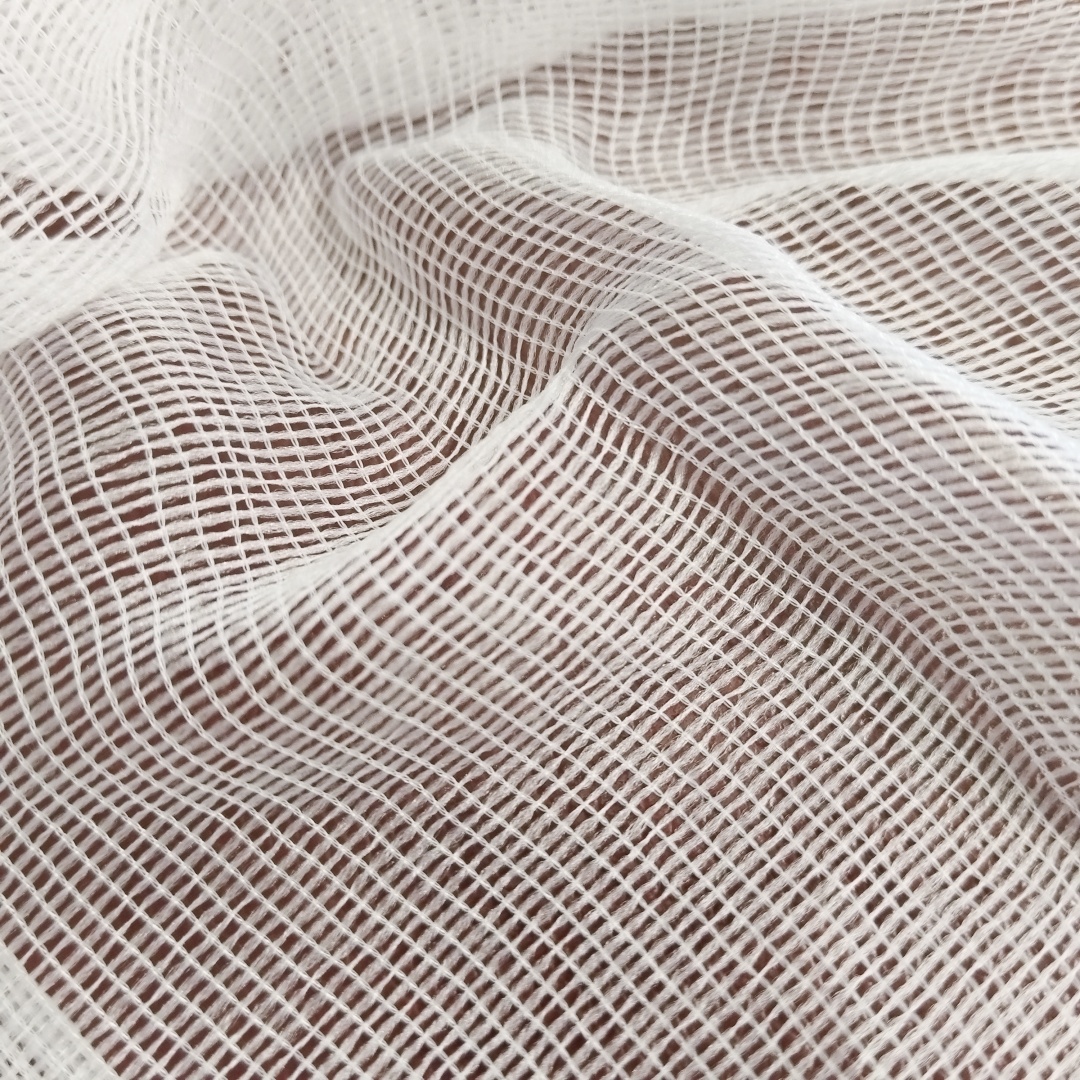
Evaluating the physical properties of your raw materials is mandatory. You cannot rely on guesswork when engineering industrial products. The foundation of tape performance lies in its mesh or thread count density. Grid density essentially dictates the tape's final grade and market application. We measure this metric in threads per square inch, separating warp (lengthwise) and weft (crosswise) yarns.
A low mesh count typically ranges from 27 to 35. Manufacturers optimize these open configurations strictly for cost. They use them primarily for utility and basic packaging tapes. Conversely, high mesh counts range from 50 up to 70 or more. These dense, tightly grouped weaves create contractor, HVAC, and military-grade tapes. They deliver exceptional tensile strength for highly demanding environments. You will notice high-mesh tapes feel significantly stiffer off the roll.
Table 1: Mesh Count and Tape Grade Comparison | |||
Mesh Count Density | Typical Tape Grade | Primary Application Scenario | Relative Tensile Strength |
|---|---|---|---|
27 - 35 | Utility Grade | Basic packaging, temporary indoor repairs | Low to Moderate |
40 - 45 | General Purpose | Household maintenance, light bundling | Moderate |
50 - 70+ | Industrial / HVAC | Contractor use, extreme outdoor environments | High to Very High |
Next, engineers must evaluate tensile strength and elongation limits. These technical benchmarks measure exactly how much load the tape bears before physical failure occurs. The overarching goal is balancing flexibility and rigidity perfectly. Too much elongation causes the tape to stretch uncontrollably during application. This ruins waterproof seals. Too little elongation makes the tape brittle and difficult to wrap around curved pipes. Rigorous machine testing guarantees your product meets stated specifications.
Finally, we must consider basis weight and physical thickness. The weight (measured in GSM) and thickness (measured in Mil) of the duct tape base cloth deeply impact production economics. Heavier, thicker materials increase the final roll diameter. This directly alters shipping economics, packaging box dimensions, and pallet stacking configurations. If your base cloth is too thick, you fit fewer rolls on a truck, inflating your per-unit freight costs.
Implementation realities heavily dictate manufacturing success. The base fabric never exists in a vacuum. It must bond perfectly with your chosen adhesive system. The interaction between the adhesive tape backing and the glue is chemically and physically complex. Overlooking this synergy results in massive scrap rates.
Consider the actual coating process carefully. You will likely use either hot melt synthetic rubber or natural rubber adhesives. The scrim interacts differently based on adhesive viscosities and application temperatures. Hot melt formulas require rapid cooling and precision tension control across the web. Natural rubber formulations often demand different solvent evaporation rates and curing times. The physical process of calendering and lamination forces these divergent materials together. Massive, heated steel rollers press the fabric into the PE film and adhesive mass simultaneously. You must maintain optimal dyne levels (surface tension) to ensure the layers fuse permanently.
Failure risks multiply aggressively during this lamination phase. Two common issues plague tape converters globally:
Adhesive Bleed-Through: This occurs when the fabric weave is excessively open. Low-viscosity adhesives seep entirely through the mesh gaps during coating. This ruins the back surface of the tape and fouls expensive manufacturing equipment. It forces costly line shutdowns for cleaning.
Delamination: This happens due to poor surface tension management. It also results from chemical incompatibility between the PE film, the scrim layer, and the adhesive. The layers simply peel apart under field stress, rendering the tape useless.
Best practices dictate implementing regular tension checks during lamination. Monitor adhesive viscosity continuously to prevent unexpected bleed-through on the coating line. Experienced engineers always run lab-scale pilot tests before transitioning a new backing material to full production speed.
Manufacturers must align base fabric specifications with precise market positioning. We call this features-to-outcomes mapping. Understanding end-use environments ensures you do not over-engineer or under-spec your finished products. Misalignment here either destroys profit margins or ruins brand reputation.
Utility and general-purpose tapes require highly specific, cost-optimized material builds. They utilize a lower mesh count grid. We optimize them for short-term holding, bundling, and basic packaging tasks. These products prioritize ultimate cost efficiency over extreme, long-term durability. They must hand-tear easily and conform rapidly to irregular surfaces. Consumers buy these for quick fixes around the house, not structural repairs.
Industrial and HVAC environments demand drastically higher performance metrics. They require high mesh count, tightly woven sealing material fabric designed specifically for rigorous conditions. These specialized tapes endure extreme temperature fluctuations, from freezing outdoor winters to boiling attic summers. Professionals rely on them for heavy-duty bundling and long-term environmental exposure. The fabric matrix must not degrade under intense UV light or sustained high humidity. If an HVAC duct tape fails, it causes massive energy leaks in commercial buildings.
Specialty applications introduce even stricter engineering parameters. Double-coated fabric tapes, theatrical gaffer tapes, and automotive wire-harnessing tapes need highly specialized weaves. Wire harnessing requires superior abrasion resistance and distinct noise-dampening properties to prevent dashboard rattles. Gaffer tape demands matte finishes and residue-free removal after stage shows. You must continuously adapt the underlying fabric to support these unique chemical and physical demands.
Procurement involves far more than reading standard specification sheets. You must evaluate B2B suppliers based on their historical manufacturing consistency. Look beyond the initial sales pitch and examine their actual factory capabilities. A cheap price per square meter means nothing if the material ruins your production run.
Quality control red flags often reveal poor manufacturing standards early. Watch out for subtle variations in weave tension across a single roll. Inconsistent slitting widths cause massive machine jamming and web breaks downstream. Varying moisture content in raw rolls leads to catastrophic adhesive curing failures. You should immediately reject suppliers demonstrating these fundamental inconsistencies during the sample phase.
Customization capabilities separate great manufacturing partners from average commodity vendors. When shortlisting suppliers, you must evaluate three core areas:
Assess their ability to weave custom patterns tailored specifically to your unique adhesive viscosity.
Verify their specific roll width offerings, strictly comparing wide jumbo rolls against narrower log rolls to match your slitting machinery.
Establish clear, reliable Minimum Order Quantities (MOQs) that fit your exact production scale and warehouse capacity.
Finally, rigorous compliance is completely non-negotiable. Verify that the supplied fabric meets baseline international testing standards. For example, refer directly to ASTM D3330 for peel adhesion testing environments. This structural testing ensures final product certification remains valid for your end users. Meeting these exact standards guarantees your tape performs reliably, protecting your market share and brand integrity.
Selecting the right polyester scrim is a complex, high-stakes balancing act. Tape manufacturers must constantly weigh tensile requirements against adhesive chemistry and unit economics. Cutting corners on the backing material compromises the entire finished roll. You need a highly structured, data-driven approach to procurement and product engineering to succeed in this competitive market.
We strongly advise taking specific, action-oriented next steps. First, always request extensive sample rolls for pilot coating runs before placing large orders. Second, demand detailed Technical Data Sheets (TDS) from your vendor to verify elongation limits and tensile strength. Finally, conduct comprehensive peel and shear tests internally. Committing to bulk procurement without these rigorous validations risks major production failures. Protect your production line by vetting your materials thoroughly today.
A: Woven cloth typically features an over-under interlocking thread pattern. This traditional method creates a heavier, denser fabric. Conversely, scrim is often an open-mesh, non-woven, or loosely woven grid. Manufacturers chemically bond the yarn intersections to hold its shape. This modern process significantly reduces material weight and production cost while maintaining excellent structural integrity.
A: Mesh count directly influences how easily and cleanly a tape tears. A highly consistent, grid-like mesh provides predictable breaking points. This allows for clean, straight tears in both the machine and cross directions. Higher mesh counts create a smoother, more precise tear, which is critical for end-user convenience in fast-paced construction environments.
A: Yes, converters frequently use polyester scrim with acrylic adhesives. However, this combination requires careful tension control during lamination. You must apply specific surface treatments to the fabric. These treatments ensure the acrylic bonds properly to the yarns without migrating through the open mesh, preventing equipment fouling.
A: In industrial B2B environments, jumbo rolls come in massive dimensions to support continuous manufacturing. Standard widths typically range from 1.0 meter to 1.6 meters. The lengths often exceed 10,000 meters per roll. These dimensions depend heavily on the specific capacity of the converter's coating and slitting machinery.


