Jumbo Roll Scrim Backing Fabric

- All
- Product Name
- Product Keyword
- Product Model
- Product Summary
- Product Description
- Multi Field Search
Views: 0 Author: Site Editor Publish Time: 2026-04-14 Origin: Site


Selecting the right backing material is one of the most important decisions in industrial product development, yet it is often treated as a secondary detail. In reality, the backing layer can strongly influence processing stability, bonding quality, product consistency, and overall production efficiency. At Taixing Cinfudy Textile CO., LTD., we often find that customers focus first on the visible surface or coating, but the long-term performance of the finished product depends just as much on the backing structure underneath.
For many industrial applications, polyester roll mesh backing material is a practical and dependable solution. It is widely used in lamination, coating, composites, calendaring, flooring, wallcoverings, insulating tape, and other technical products because it offers a strong balance of reinforcement, dimensional stability, and process compatibility. However, not every polyester mesh backing is the same. Choosing the right one requires a closer look at how the material will behave in the real production environment.
A backing fabric is not simply a support layer. It has to work together with adhesives, coatings, films, or compound layers while also performing well under heat, tension, pressure, and continuous handling. If the wrong backing material is selected, several problems may appear during production: poor adhesion, distortion, unexpected shrinkage, seam-related waste, unstable running on the line, or variation in the final product.
That is why we usually recommend evaluating polyester roll mesh backing material from both a product perspective and a manufacturing perspective. A material may look suitable on paper, but if it does not fit the production process, it can increase cost rather than reduce it. Good selection starts with understanding the real needs of the project.
The first step is to define where and how the material will be used. Different industrial products place different demands on the backing layer. A backing for PVC wallcoverings may need dimensional stability and good bonding support. A backing for flooring materials may need reinforcement and low shrinkage. A backing for insulating tape or technical composites may need a more controlled structure with reliable performance under processing conditions.
Before selecting a specification, we usually ask a few simple questions:
What is the final product category?
Will the material be coated, laminated, or compounded?
Will the production process include heat?
Does the finished product require dimensional precision?
Is continuous production efficiency a major concern?
These questions help narrow the selection much more effectively than choosing only by basic price or weight.
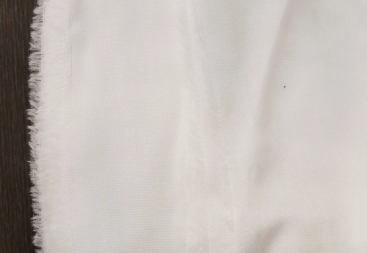
In many industrial projects, stability is more important than flexibility. A backing material that stretches too easily may create alignment problems, uneven bonding, or dimensional inconsistency. This is why non-elastic polyester mesh backing is often preferred in industrial settings. A more stable structure helps keep the material under control during converting and supports better finished quality.
When selecting a backing material, it is important to think about how it behaves under line tension, coating pressure, and handling during production. If the process requires stable shape retention, a non-elastic woven backing is usually the safer choice.
Shrinkage is one of the most important yet sometimes overlooked criteria. During lamination, calendaring, or heated coating, the material may be exposed to thermal and mechanical stress. If the backing shrinks too much, it can affect the whole structure of the final product.
For this reason, low-shrinkage polyester roll mesh backing material is especially valuable in industrial projects. Better dimensional stability means better process control, less waste, and more consistent product performance. In our experience, customers who pay attention to shrinkage early in the selection stage usually avoid many downstream quality issues.
Many industrial lines involve temperature exposure. Some materials pass through heated rollers, ovens, or thermal bonding stages. In such conditions, heat resistance becomes a practical requirement rather than an extra feature.
A polyester roll mesh backing material with good heat resistance can adapt to a wider range of production methods. This gives manufacturers more flexibility and reduces the risk of backing deformation during processing. When a project includes thermal treatment, this factor should always be checked carefully.
The construction of the backing material matters as much as the raw fiber. A woven mesh backing offers organized reinforcement, balanced structure, and predictable handling. This is especially useful in industrial use, where uniform performance across the roll can improve line stability.
Mesh design also affects how the backing interacts with coatings or laminated layers. A well-chosen woven mesh can support bonding, distribute stress more evenly, and help the product maintain its form. In many cases, the correct structure makes the difference between a backing material that only works and one that works efficiently.
Heavier material is not always better. A backing that is too heavy may add unnecessary cost or change the hand feel and processing behavior of the finished product. On the other hand, a material that is too light may not provide enough support.
The right balance depends on the project. For some industrial products, a lightweight polyester mesh backing is enough to provide reinforcement while keeping the overall structure efficient. For others, a more robust backing may be necessary. Selection should always consider both performance needs and process suitability.
In industrial production, roll format has a direct effect on efficiency. This is one reason jumbo roll polyester mesh backing material is widely valued. Longer rolls reduce the number of roll changes during production, which helps improve continuity and reduce labor interruptions. They also reduce the number of seams that may appear in the finished process.
Frequent roll changes can create lost time, added handling, and inconsistent quality around splice areas. A jumbo roll format helps solve this problem by supporting longer uninterrupted runs. For manufacturers operating continuous lines, this often becomes one of the strongest reasons to choose a jumbo roll backing rather than smaller standard rolls.
The table below shows how we typically match selection priorities with industrial project needs.
Selection Factor | Why It Matters | What to Look For |
End-use application | Determines required performance | Match the backing to wallcoverings, flooring, coating, composites, or technical tape |
Dimensional stability | Affects product consistency | Choose non-elastic woven polyester mesh |
Low shrinkage | Reduces distortion during processing | Prefer backing with reliable size retention under heat and tension |
Heat resistance | Supports thermal production methods | Confirm suitability for lamination, calendaring, or heated coating |
Weight and structure | Balances support and efficiency | Select a mesh that reinforces without adding unnecessary bulk |
Roll length | Affects productivity and seam frequency | Consider jumbo roll format for continuous industrial lines |
Bonding support | Improves composite performance | Evaluate whether the mesh structure suits adhesive or coating systems |
Customization ability | Helps match project-specific needs | Work with a supplier that can adjust width, weight, and construction |
It is understandable that buyers compare prices first, especially for large-volume industrial projects. However, backing materials should not be selected on initial cost alone. A cheaper material that causes shrinkage issues, bonding defects, extra waste, or more downtime can quickly become the more expensive choice.
We usually encourage customers to look at the full production impact. If a better polyester roll mesh backing material improves line stability, reduces seam handling, and helps maintain product consistency, it often creates more value over time. In industrial manufacturing, the right material is usually the one that supports efficiency and quality together.
Not every industrial project fits a standard specification. Different applications may require different widths, roll lengths, fabric weights, or construction details. This is why customization can be an important part of selection.
At Taixing Cinfudy Textile CO., LTD., we understand that industrial customers often need backing materials aligned with specific processing methods and product targets. A project may require a certain width for line compatibility, a certain weight for balance, or a certain roll length for continuous production planning. Choosing a supplier that can support these adjustments often makes the selection process more practical and effective.
When selecting polyester roll mesh backing material, a few common mistakes appear repeatedly.
One is focusing only on appearance or simple specification while ignoring process conditions. Another is underestimating the effect of shrinkage. A third is choosing standard roll sizes when the production line would benefit more from jumbo rolls. Some buyers also overlook how much the mesh structure influences bonding and handling.
The safest approach is to evaluate the backing material as part of the whole system. It should fit the product, the process, and the efficiency goals at the same time.
Choosing the right polyester roll mesh backing material for industrial projects is about more than selecting a fabric from a list. It means understanding the demands of the final application, the realities of the production line, and the balance between stability, efficiency, and long-term value. Factors such as low shrinkage, non-elastic behavior, heat resistance, woven structure, roll length, and customization all play an important role in making the right decision.
At Taixing Cinfudy Textile CO., LTD., we believe the best backing material is the one that supports both product quality and manufacturing performance. When industrial users take the time to match backing specifications to real project needs, they are much more likely to achieve consistent results. For readers who want to explore suitable options in more detail, we recommend learning more from Taixing Cinfudy Textile CO., LTD. or contacting our team for practical support based on your application.
Q: What is polyester roll mesh backing material used for?
A: It is used in industrial products such as wallcoverings, flooring, coated fabrics, composites, laminates, and insulating tape where reinforcement and process stability are needed.
Q: Why is low shrinkage important when selecting polyester mesh backing?
A: Low shrinkage helps the backing keep stable dimensions during heat and tension, which improves product consistency and reduces processing problems.
Q: What is the benefit of jumbo roll polyester mesh backing material?
A: Jumbo rolls reduce roll changes, lower seam-related waste, and help continuous production lines run more efficiently.
Q: How do we choose the right polyester roll mesh backing material for industrial projects?
A: The best choice depends on end use, heat resistance, dimensional stability, bonding needs, roll length, and whether customization is required for the production process.


