Jumbo Roll Scrim Backing Fabric

- All
- Product Name
- Product Keyword
- Product Model
- Product Summary
- Product Description
- Multi Field Search
Views: 0 Author: Site Editor Publish Time: 2026-08-27 Origin: Site


The longevity and aesthetic integrity of a commercial wallcovering installation rely as much on the unseen substrate as the surface design. Specifying an incorrect backing material for vinyl wallcoverings leads to costly failures, including delamination, seam separation, moisture entrapment, bunching, and installation tears during adjustment. When contractors attempt to manipulate a poorly backed material on the wall, the resulting structural damage compromises the entire wall system and forces immediate replacement. For light construction areas and low-traffic environments requiring a lightweight, open-weave substrate, the choice typically narrows down to polyester, cotton, or a blended scrim. This guide provides a technical evaluation of polyester versus cotton scrims to help specifiers, architects, and contractors align material properties with industry standards and project requirements.
Application Scope: Scrim is a lightweight, open-weave backing strictly intended for light construction areas and low-traffic spaces, distinct from heavier osnaburg or drill backings used in medium-to-heavy impact commercial corridors.
Polyester Dominance: Polyester scrim offers superior dimensional stability, high tensile strength, and inherent moisture resistance, making it the absolute industry standard for stabilizing modern vinyl composite backing.
Cotton Utility: Cotton scrim backing provides exceptional pliability and superior paste absorption, ideal for complex wall geometries, but carries higher risks in moisture-prone environments.
Risk Mitigation: The decision between synthetic and natural fibers dictates the choice of adhesive, wall preparation protocols, and long-term mold mitigation strategies.
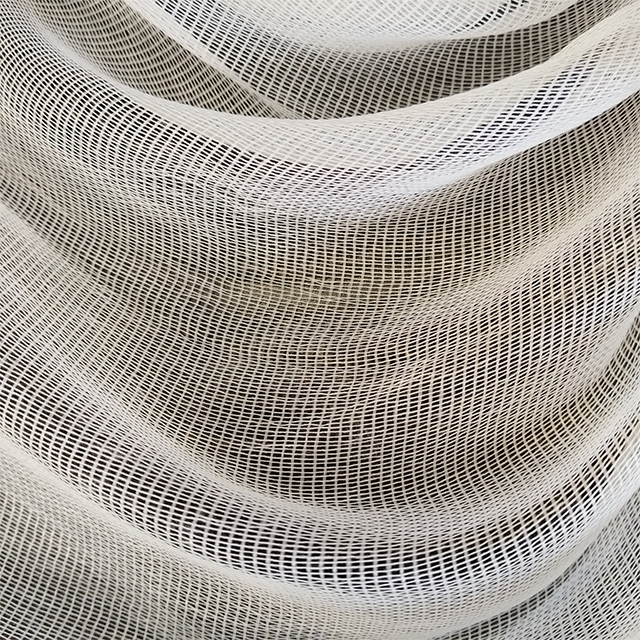
Defining the exact manufacturing process of a woven scrim fabric requires looking at how textile mills construct the base layer. Scrim is a sheer, lightweight, open-weave textile. During production, manufacturers arrange warp and weft yarns in a loose grid. They bond these threads, weave them lightly, or secure them with a thin synthetic film. This specific construction method provides foundational stability to the wallcovering without adding unnecessary bulk or stiffness. The open grid pattern allows the material to remain highly flexible while offering a rigid structural skeleton for the decorative vinyl face. Installers depend on this grid to keep the material square when dropping plumb lines.
Establish the baseline requirements for a successful backing system. The primary function of any substrate in a vinyl composite backing is to prevent the vinyl layer from stretching or bunching during the physical installation process. When an installer applies heavy paste and books the material, the backing must hold its exact shape.
A successful scrim backing must meet several non-negotiable field requirements:
Maintain absolute dimensional stability after absorbing moisture from commercial adhesives.
Provide a mechanical key that allows the paste to grip both the primed drywall and the wallcovering securely.
Resist tearing when installers pull large panels off the wall for repositioning.
Prevent seams from opening or curling as building temperatures and humidity levels fluctuate over the years.
Lay perfectly flat against the wall without telegraphing the weave pattern through the vinyl face.
Clarify the strict use-case boundaries for these materials. Scrim is engineered exclusively for Type I and light Type II vinyls. You will find these specific materials specified for corporate offices, hotel guest rooms, and residential spaces where surface abrasion is minimal. Conversely, heavier textiles are mandatory for medium-to-heavy usage areas. Commercial building corridors, hospital hallways, and high-traffic public spaces require the dense, tightly woven structure of osnaburg to withstand physical impact. Using scrim in these high-traffic zones guarantees rapid material failure.
Analyze the synthetic nature of polyester fibers in commercial applications. This material is inherently hydrophobic, meaning it actively repels water rather than absorbing it into the fiber core. It also boasts an exceptionally high tensile strength-to-weight ratio. These distinct properties make polyester scrim highly durable despite its ultra-lightweight physical profile. The synthetic fibers do not degrade, rot, or weaken when exposed to alkaline wall conditions or standard commercial adhesives over long periods. Installers working with polyester notice immediately that the material feels stiffer and more rigid in the hand compared to natural fibers.
Look closely at the features-to-outcomes mapping. Dimensional stability stands out as the most prominent advantage for professional installers. Polyester prevents the vinyl from expanding or contracting during the pasting and booking process. Installers rely entirely on this stability to create tight, invisible seams that will not shrink and expose the underlying drywall as the paste dries.
Tear Resistance: Installers can tug, adjust, and reposition heavy panels of wallcovering on the wall without tearing the substrate.
Bunching Prevention: The rigid grid stops the vinyl face from bunching up into unmanageable creases when pushed with a smoothing tool.
Clean Cutting: Synthetic fibers cut sharply under a razor blade, preventing frayed edges during the double-cutting process.
Biological Inertness: The lack of organic matter means the backing will not support mold growth even if minor moisture penetrates the wall cavity.
Consider the implementation risks and required mitigation strategies. The primary risk involves the lower natural absorbency of synthetic fibers. Because polyester does not soak up moisture, it can significantly increase the curing time of certain water-based adhesives. The paste sits on the surface of the synthetic fibers rather than penetrating them deeply. To mitigate this handling issue, specifiers must require compatible, high-tack commercial adhesives designed specifically for synthetic backings. Installers must also allow for proper tack time before applying the material to the wall to prevent downward slippage.
Performance Metric | Polyester Scrim | Cotton Scrim |
|---|---|---|
Dimensional Stability | Excellent (No expansion when wet) | Moderate (Prone to slight expansion) |
Moisture Absorption | Hydrophobic (Repels water) | Hydrophilic (Absorbs water deeply) |
Mold Resistance | High (Inert synthetic material) | Low (Requires chemical biocides) |
Pliability on Wall | Moderate (Stiffer handling) | High (Conforms to irregular shapes) |
Adhesive Tack Time | Longer (Paste sits on surface) | Shorter (Paste absorbs into fibers) |
Examine the physical characteristics of natural cotton fibers. Cotton is widely known for its breathability, physical softness, and highly hydrophilic nature. It readily and rapidly absorbs water and ambient moisture. In the context of a cotton scrim backing, these organic properties translate to a highly pliable material. This substrate behaves very differently from synthetic alternatives during the pasting, booking, and hanging phases of installation. When an installer applies paste to cotton, the material immediately softens, losing much of its initial rigidity.
Address the reality of commercial manufacturing regarding pure cotton constructions. Many backings aggressively marketed as pure cotton still rely heavily on a thin polyester film or synthetic bonding glue. Manufacturers use these synthetic additions to hold the short cotton fibers in place and provide the necessary tensile strength for commercial handling. Without this hidden synthetic reinforcement, a pure cotton scrim would simply pull apart under the heavy tension of professional installation and seam adjustment. The industry accepts this hybrid construction as standard practice for natural fiber backings.
Evaluate the features-to-outcomes for natural fibers. The standout feature of cotton is its superior pliability on the wall. The material conforms easily to irregular wall surfaces, tight inside corners, and complex architectural details. Installers working around structural columns or intricate moldings often prefer the soft drape of cotton. Furthermore, natural fibers absorb paste deeply into their core. This deep absorption creates a highly aggressive mechanical bond with traditional clay-based or clear adhesives, locking the wallcovering firmly to the primed surface once fully cured.
Identify the severe implementation risks and mitigation tactics. The greatest risk is cotton's extreme susceptibility to moisture retention. Trapped moisture behind an impermeable vinyl surface can quickly lead to mold, mildew, or dry rot in the backing itself. To mitigate these severe biological risks, contractors must maintain strict climate control during installation. Mandatory use of premium mold-inhibiting primers is essential. Furthermore, specifiers must completely avoid using cotton-backed materials in high-humidity environments like commercial bathrooms, kitchens, or unconditioned spaces.
Explain why industry authorities favor blended materials. Organizations like the Wallcoverings Association define standard wallcovering scrim backing as typically a calculated blend of polyester and cotton. This compromise approach directly addresses the extreme limitations of using either fiber in total isolation. A blended substrate provides a highly functional middle ground. It satisfies both the structural requirements of the manufacturer and the tactile handling preferences of the professional installer. By mixing the fibers at the mill level, manufacturers create a backing that performs predictably across a wide range of job site conditions.
Detail how blends balance these specific trade-offs. The manufacturing process utilizes polyester to provide structural integrity, overall stabilization, and vital tear resistance. The synthetic grid stops the material from stretching out of shape when wet. Simultaneously, the blend leverages cotton fibers to improve adhesive tack and overall flexibility. The cotton component absorbs just enough paste to create a strong initial grab on the wall. Meanwhile, the polyester ensures the seam remains perfectly flat and stable as the adhesive cures over several days. Installers appreciate blends because they offer the safety of synthetic stability with the familiar handling characteristics of natural textiles.
Compare the sheer strength of 100% polyester versus cotton-dominant backings. When subjected to the heavy pulling forces of professional installation, polyester maintains its rigid grid structure. Installers frequently need to pull large, heavy panels of vinyl off the wall to realign a complex pattern or smooth out a trapped air bubble. Polyester easily withstands this tension without warping. Cotton-dominant backings, even when reinforced, are far more prone to distortion under heavy pulling. This distortion can permanently warp the surface pattern, ruining the visual alignment of the entire wall.
Evaluate how each material handles the intense stress of double-cutting seams. Professional installers overlap two panels and cut through both layers simultaneously with a razor to create a perfect, invisible seam. Polyester cuts cleanly without fraying, leaving a sharp, rigid edge that butts together seamlessly. Cotton fibers can sometimes fray or pull during the double-cut, especially if the installer's blade is not perfectly sharp. This fraying leads to micro-bunching at the seam line, severely compromising the aesthetic finish and creating weak points for future delamination.
Assess the behavior of both materials behind a non-breathable vinyl face. Vinyl acts as a strict vapor retarder, trapping any moisture present in the wall cavity or introduced during the pasting process. A vinyl wallcovering scrim backing made entirely of polyester remains completely inert in this trapped environment. It does not absorb the moisture, nor does it provide a viable food source for biological growth, ensuring long-term sanitary compliance. This makes synthetic backings the only viable choice for healthcare facilities, hospitality environments, and regions with high ambient humidity.
Highlight the stark differences in mold resistance. Because polyester is a synthetic polymer, it naturally resists mold and mildew degradation without requiring heavy chemical treatments. Cotton, being an organic cellulose material, serves as a prime food source for mold spores. To achieve similar environmental compliance and mold resistance, manufacturers must treat cotton backings with heavy chemical biocides. Over time, or under continuous moisture exposure, these chemical treatments can wash out or fail, leading to rapid substrate degradation and eventual delamination of the wallcovering.
Map the specific adhesive requirements for each backing type. Polyester backings typically require premium strippable clear adhesives. Chemists formulate these adhesives to tack up quickly and grip the synthetic fibers without needing to penetrate them deeply. The low moisture content of these specific pastes prevents the heavy vinyl from sliding down the wall during the critical curing phase. Using the wrong paste on polyester results in immediate installation failure, as the material will simply peel away from the drywall once the moisture evaporates.
Discuss the chemical interaction with cotton. Cotton backings often perform much better with heavier clay adhesives or highly diluted clear pastes that can soak deeply into the natural fibers. The open weave of the scrim fabric interacts directly with wall primers to create a permanent bond. The primer seals the porous drywall, and the adhesive forms a structural bridge between the sealed wall and the woven backing. With cotton, this bridge is highly integrated into the fiber; with polyester, it relies on a strong surface-level mechanical lock.
Analyze how the backing material impacts the overall ASTM E84 fire rating. Commercial building codes strictly mandate a Class A fire rating for all interior wall finishes. The testing laboratory evaluates the entire composite system—the vinyl face, the adhesive, and the backing together as one unit. Both polyester and cotton backings can achieve this required rating, but they react fundamentally differently under extreme heat and direct flame exposure. Specifiers cannot assume that a fire-rated vinyl face guarantees a fire-rated assembly if the backing material changes.
Discuss the physical reactions to fire. Polyester has a specific, predictable melting point. Under high heat, it tends to melt, shrink, and pull away from the flame source, limiting flame spread. Cotton is highly flammable by nature and will char, smolder, and burn rapidly. To pass commercial fire codes, manufacturers must apply aggressive flame-retardant chemical treatments to cotton scrims. Specifiers must ensure that the chosen wallcovering system maintains its Class A rating regardless of the backing material used, as any alteration in the substrate can drastically affect the flame spread and smoke developed indices.
Polyester scrim is the superior, lower-risk choice for the vast majority of modern commercial vinyl wallcoverings. Its absolute dimensional stability, resistance to bunching, and inherent moisture resistance solve the most common installation failures encountered in the field. Cotton scrim remains a highly specialized, niche solution reserved strictly for complex installations requiring maximum flexibility around difficult architectural features.
Take these actionable next steps to ensure a successful installation:
Consult directly with your wallcovering manufacturer to verify the exact scrim composition of your shortlisted Type I vinyls before finalizing the specification.
Request physical samples for on-site adhesion testing with your specific wall primers to confirm compatibility.
Align your adhesive specification strictly with the chosen backing material to guarantee long-term structural integrity.
Mandate climate control protocols for the job site at least 72 hours before, during, and after the installation process.
A: Scrim is a lightweight, open-weave fabric used primarily in light construction areas and low-traffic spaces. Osnaburg is a heavier, denser woven fabric required for medium-to-heavy usage areas, such as commercial building corridors. Scrim provides basic stability, while osnaburg offers high impact resistance.
A: Polyester excels at stabilizing vinyl. It provides superior dimensional stability, allows installers to tug and adjust the material without tearing or bunching, and is completely immune to mold and moisture degradation, significantly reducing long-term failure risks.
A: Often, no. To achieve the necessary tensile strength for commercial wallcoverings, cotton backings frequently incorporate a thin polyester film or synthetic glue. This hidden reinforcement holds the natural fibers in place and prevents the material from tearing during professional installation.
A: While many standard commercial clear adhesives work, synthetic backings often require specific high-tack or low-moisture pastes. Because polyester does not absorb moisture like natural cotton, the adhesive must be explicitly formulated to grip the synthetic surface effectively.
A: The entire vinyl composite backing system is tested together for fire ratings. Both treated cotton and polyester can achieve Class A ratings under ASTM E84. However, they behave differently under heat, with polyester melting away from flames and cotton charring.
A: No. Scrim is strictly intended for light-traffic areas like private offices and hotel rooms. For high-traffic corridors subject to cart impacts and heavy pedestrian use, specifiers must upgrade to a heavier backing like osnaburg or drill fabric to prevent damage.


